

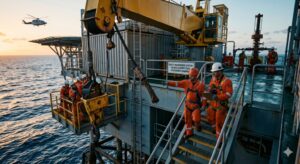
Working offshore is risky business. Few industries can match the injury rates, especially when it comes to working in the ocean rather than on terra firma. The heavy equipment, rotating and moving machinery, slippery surfaces, and isolation in combination mean that when something goes wrong, it goes wrong spectacularly. Knowing what causes these accidents and what protections are available to injured offshore workers can be the difference between a serious injury and a fatality and catching the next chopper home.
Who You Are Legally Changes What You’re Owed
This difference is important and most offshore workers don’t learn about it until they’ve been injured.
Seamen have rights under the Jones Act, a federal law that allows them to sue their employers for negligence and recover damages including medical expenses, lost wages, and physical and emotional suffering. Seamen can also demand maintenance and cure, an employer’s responsibility to cover living expenses and medical treatment with no out-of-pocket expense for the seaman while they recuperate.
Workers on fixed platforms who don’t meet the seamen definition fall under other federal laws like the Outer Continental Shelf Lands Act or the Longshore and Harbor Workers’ Compensation Act, but these don’t allow payouts for physical and emotional suffering, and the process for receiving funds isn’t the same either.
When an incident happens in the Gulf of Mexico, the first logical step is to contact a beaumont offshore injury lawyer because federal laws determine jurisdiction, you need to know exactly what you could claim, and time limits vary for each offense but they all erase your ability to sue if you miss it.
The Human Factor is Still the Biggest Problem
Fatigue is the most frequently cited factor in incident reports. With demanding 12-hour rotations, extended shifts, and the urgency to maintain production, workers will make mistakes that they otherwise wouldn’t if properly rested. Inadequate training further exacerbates the problem. The moment someone is tasked to a piece of equipment that they have not been fully trained to operate, the chance of an incident immediately increases.
The solution is not simply to get the scheduling right, but rather to implement Safety Management Systems that regard fatigue and competency as operational hazards rather than HR challenges. This calls for training records to be kept, critical task sign-off procedures to be followed, and supervisors not to be incentivised to drive through fatigue in their crews.
Equipment Failures That Courts Take Seriously
Machinery like cranes, winches, pressure valves, and blowout preventers are the lifeblood of offshore operations. When they’re poorly maintained and break, they’re often the proximate cause of catastrophic injury. Under maritime law, poorly maintained equipment can form the basis of an unseaworthiness claim, the legal principle that a vessel owner has an obligation to provide a ship and its equipment in a condition reasonably fit for their intended use.
The failure of one of these critical systems often marks the failure of basic operational norms that could have prevented a needless tragedy. It typically means that a piece of equipment failed because it wasn’t serviced, inspected, or replaced often enough.
Why the emphasis on likely liability-causing systems? A crane that hasn’t been maintained is a threat multiplier; everything about it invites disaster. A wire rope that’s gone without lubrication or shown the first signs of failure won’t carry its intended loads. A winch that’s begun to corrode could fail catastrophically, rewinding under enormous tension and causing injury.
Under maritime law, none of those scenarios would be “accidents.” They’d be the result of predictable use in a negligent system of management. A plaintiff’s attorney would have a field day with any one of those examples, and the jury would likely return a large verdict.
Slip and Fall Risks in Maritime Environments
Offshore and maritime injury law sets a high bar for what constitutes a safe walking surface. OSHA regulations require anti-skid coating on all walking and work surfaces, including steps and ladder rungs, and all areas where workers are required to pass should be kept clear and clean. In addition, each employer must “maintain all places of employment, exits, and access ways in a clean, orderly, and sanitary condition.”
What to do in the Hours After an Accident
Report the incident immediately and in writing. Don’t let it be handled verbally. The official record of how an injury is reported and documented becomes important if a claim is ever disputed.
Seek an independent medical evaluation. Company-contracted doctors have an inherent conflict of interest, they’re paid by the same employer who may be liable for your injury. That doesn’t mean their diagnosis is always wrong, but it does mean their assessment of your fitness for duty and the extent of your injuries shouldn’t be the only medical opinion you rely on.
Keep records. Photographs of the accident scene, names of witnesses, copies of any incident reports, these are the kinds of documentation that support a claim and tend to disappear or become difficult to obtain as time passes.
Offshore safety is both an operational responsibility and a legal right. When employers and vessel owners don’t meet their obligations, the workers who get hurt have real legal recourse, but only if they act on it.
Veeramachineni Lalitha

I am Finance Content Writer. I write Personal Finance, banking, investment, and insurance related content for top clients including Kotak Mahindra Bank, Edelweiss, ICICI BANK and IDFC FIRST Bank. My experience details : Linkedin