

The Evolution of Thermal Systems in Modern Manufacturing
 The transformation of industrial byproducts into valuable resources is a critical challenge for modern manufacturing. Fly ash, a byproduct from thermal power plants, offers immense potential. For many years, disposing of this material was a significant problem. Today, advanced thermal processing equipment is changing this. It helps turn fly ash into a valuable asset. This process is crucial for preparing fly ash for reuse, especially in the growing cement industry.
In this guide, we will explore why fly ash drying is so important. We will look at the principles behind these drying systems. We will also examine the latest innovations that are moving this sector forward. We aim to help you understand the core technologies and benefits offered by manufacturers of industrial thermal processing equipment, including those specializing in efficient Industrial fly ash dryers.
In April 2026, industrial trends are increasingly focused on efficiency, sustainability, and resource recovery. Thermal systems, particularly industrial dryers, are at the forefront of this evolution. As global industrialization continues, the demand for effective moisture removal solutions across diverse sectors has surged. This is particularly true for byproducts of thermal power generation, such as fly ash and pond ash, which represent significant resource management challenges and opportunities. Environmental regulations worldwide are becoming more stringent, pushing industries to adopt technologies that not only process materials efficiently but also minimize environmental impact. Modern thermal processing equipment is designed to meet these dual objectives, transforming what was once waste into valuable commodities. The sophisticated engineering behind today’s drying systems ensures precise control over the drying process, making them indispensable for industries aiming for both economic viability and ecological responsibility.
Understanding the Importance of Fly Ash in Cement Production
Fly ash is a fine, powdery residue resulting from the combustion of pulverized coal in thermal power plants. Historically, it was largely considered a waste product, often disposed of in landfills or ash ponds. However, its unique pozzolanic properties make it an invaluable material, particularly in the cement industry. When dried and processed, fly ash can significantly enhance the performance of Portland cement concrete. Its fine particles react with calcium hydroxide released during cement hydration, forming additional cementing compounds. This reaction, known as pozzolanic activity, contributes to increased concrete durability, reduced permeability, improved workability, and enhanced long-term strength.
Beyond cement, processed fly ash finds applications in various other sectors. It is extensively used for soil stabilization, improving the engineering properties of weak soils. In construction, it serves as a cost-effective material for structural fills and road subbase construction, providing stability and reducing the need for virgin materials. Furthermore, fly ash plays a crucial role in waste stabilization, encapsulating hazardous components and preventing their leaching into the environment. The beneficiation of fly ash through effective drying processes unlocks its full potential, transforming a liability into a valuable resource that supports sustainable infrastructure development.
Advancements in Industrial Thermal Processing for Mineral Byproducts
The landscape of industrial thermal processing for mineral byproducts has seen remarkable advancements in recent years. At the heart of this progress are sophisticated industrial fly ash dryers, engineered to tackle the unique challenges presented by materials like fly ash and pond ash. These advanced systems are designed not just for simple moisture reduction but for comprehensive material beneficiation. Modern dryers achieve precise moisture reduction, often reducing content from as high as 20% down to less than 1%, making the material suitable for high-value applications. Crucially, they also ensure particle size uniformity through integrated grinding or classification stages, which is vital for consistent performance in end products like cement.
High-temperature drying, coupled with precision grinding, facilitates the pozzolanic activation of fly ash, maximizing its reactivity and contribution to infrastructure performance. This integration of drying and processing steps within a single system boosts overall efficiency and product quality. The continuous innovation in the design and operation of these systems underscores their pivotal role in transforming industrial waste into valuable resources, driving both economic and environmental benefits.

Precision Control in Industrial Thermal Processing
Precision control is paramount in modern industrial thermal processing, especially when dealing with sensitive materials like fly ash. Achieving uniform heat transfer throughout the material is critical to prevent localized overheating or incomplete drying. Advanced dryer designs incorporate features like custom internal flights and optimized drum rotation to ensure that every particle is exposed to the hot drying medium for the appropriate duration. This leads to consistent moisture removal and prevents degradation of material properties.
Residence time optimization is another key aspect of precision control. Depending on the material’s characteristics and desired final moisture content, the system precisely manages how long the material remains within the drying chamber. This is often achieved through adjustable parameters such as drum inclination, rotational speed, and hot air velocity. Controlled atmospheres, including inert gas environments, can be employed for materials prone to oxidation or combustion, ensuring thermal stability and safety. The ability to analyze material behavior in real-time and make precise adjustments allows for repeatable process outcomes, guaranteeing high-quality, consistent output batches that meet stringent industry specifications.
The Role of Industrial Thermal Processing in Circular Economies
Industrial thermal processing plays a transformative role in fostering circular economies by converting industrial byproducts into valuable resources, closing material loops. For materials like fly ash, effective drying systems are instrumental in reducing the vast quantities traditionally sent to landfills or stored in ash ponds. This not only mitigates environmental pollution and land degradation but also reclaims valuable land for other uses.
The process facilitates significant resource recovery, turning what was once a disposal cost into a revenue stream. By beneficiating fly ash, industries can produce sustainable construction materials, such as supplementary cementitious materials, aggregates, and fillers. This reduces the reliance on virgin raw materials, conserving natural resources and often lowering the overall carbon footprint associated with construction. The ability to transform byproduct into useful input material exemplifies byproduct beneficiation, moving industries away from linear “take-make-dispose” models towards more regenerative systems. This shift aligns with global efforts to minimize waste, promote sustainability, and build a more resilient industrial future.
Engineering Principles of Fly Ash and Pond Ash Drying
The engineering principles behind fly ash and pond ash drying are diverse, each tailored to the specific characteristics of the material and the desired outcome. Flash drying technology, for instance, is characterized by its rapid drying process, often completing moisture removal in less than a second. This method is particularly effective for fine, light particles like fly ash, where rapid heat and mass transfer are crucial to prevent material degradation. Flash dryers utilize a high-velocity hot gas stream to entrain and dry particles almost instantaneously.
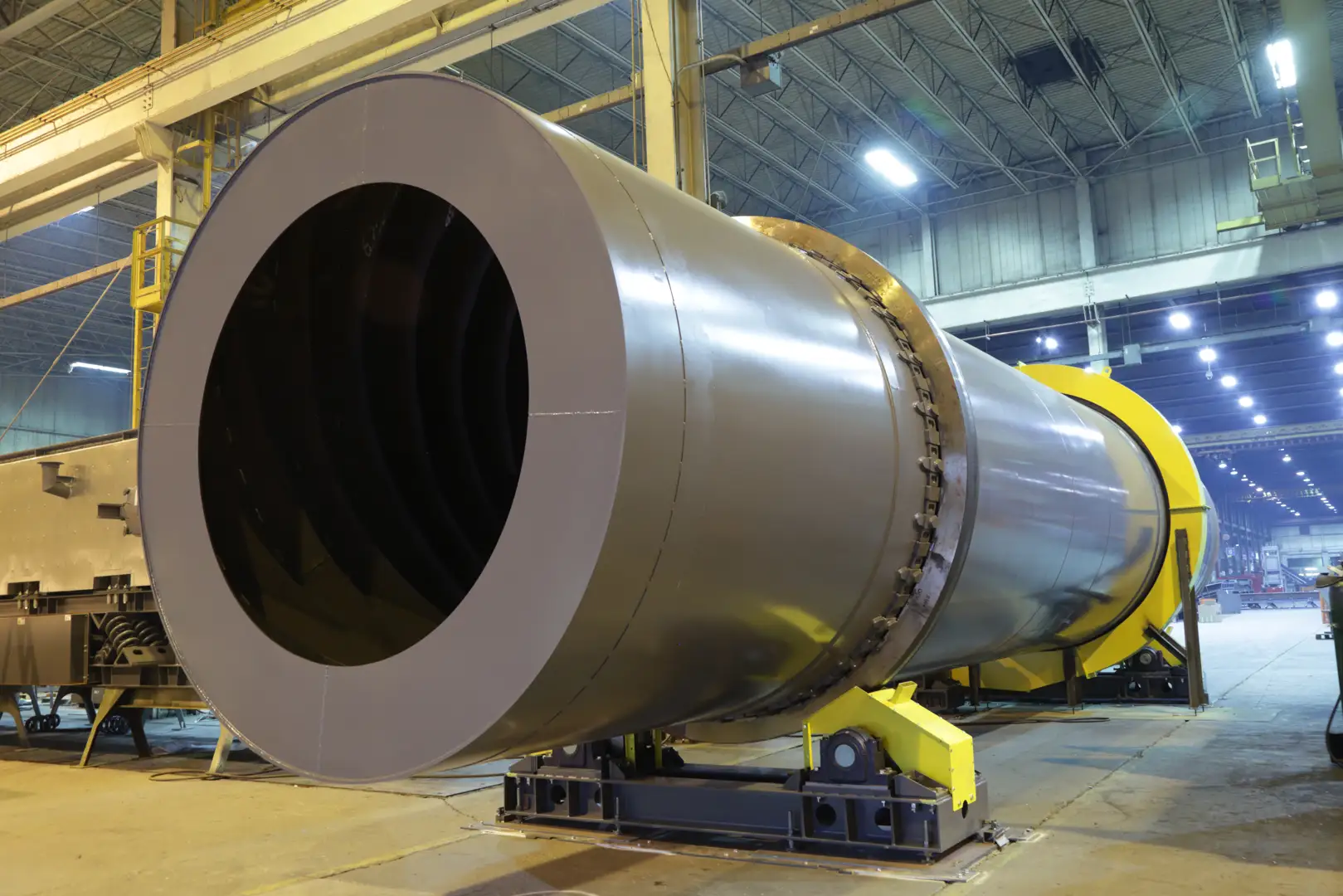
Rotary drum drying is another prevalent method, especially for pond ash, which typically has higher moisture content and larger particle sizes. These dryers consist of a rotating cylindrical shell, slightly inclined, through which material tumbles and contacts hot gases. The internal design, featuring lifting and guiding flights, ensures thorough mixing and efficient heat transfer. Fluidized bed systems offer yet another approach, suspending particles in a hot air stream, allowing for excellent heat and mass transfer and uniform drying.
Regardless of the specific technology, the core principles revolve around maximizing heat transfer efficiency and optimizing material flow dynamics. This includes controlling the temperature, velocity, and humidity of the drying medium, as well as the residence time of the material. Modern systems aim for thermal efficiencies ranging from 70% to 85%, operating at temperatures typically between 200°C and 600°C, depending on the material and application. The goal is to achieve efficient moisture evaporation while preserving the material’s integrity and desired properties.
Comparing Industrial Drying Technologies
When selecting an industrial dryer for fly ash or pond ash, understanding the nuances of various technologies is crucial.
Direct Firing involves direct contact between the hot combustion gases and the material. This method is highly efficient in terms of heat transfer but requires careful control to prevent product contamination or thermal degradation, especially for materials sensitive to combustion byproducts.
Indirect Heating systems separate the heat source from the drying chamber, using heat exchangers to transfer thermal energy to the drying medium. This is ideal for materials where product purity is paramount or when using specific drying gases (e.g., inert gases) is necessary. While offering cleaner drying, indirect systems typically have lower thermal efficiency compared to direct firing.
Triple Pass Dryers are a type of rotary dryer designed for enhanced efficiency and reduced footprint. They feature three concentric drums, where material passes through each drum in sequence. This design maximizes heat utilization and increases the effective drying length within a compact unit, making them suitable for high-capacity applications with moderate to high moisture content.
Air Swept Systems, often seen in flash dryers, rely on a high-velocity air or gas stream to convey and dry fine particles. The rapid movement and large surface area exposure lead to extremely short retention times, making them ideal for materials that dry quickly or are heat-sensitive.
Key parameters like retention time (how long the material stays in the dryer), gas velocity (speed of the drying medium), and material discharge temperature are meticulously controlled in each system. For instance, rotary dryers offer longer, adjustable retention times suitable for materials requiring more thorough drying, while flash dryers excel with very short retention times for fine, free-flowing powders. The choice depends on the material’s initial moisture, particle size distribution, desired final moisture, and specific process requirements.
Technical Specifications and Components of Drying Plants
Modern fly ash drying plants are complex systems comprising several integrated components, each designed for optimal performance. The production capacity of these plants typically ranges from 5 TPH (Tons Per Hour) to 50 TPH, catering to various industrial scales. Power consumption can vary significantly, from 50 to 450 hp, depending on the dryer type, capacity, and auxiliary equipment. For rotary dryers, the drum inclination is a critical parameter, often set around 2.5 degrees to facilitate material flow and optimize residence time.
A typical plant includes robust feeding hoppers, often equipped with aeration systems and vibrator controls to ensure a smooth, consistent flow of wet fly ash into the dryer, preventing bridging or clogging. The core drying unit, whether a rotary drum or a flash dryer, is supported by a powerful hot air generator that can utilize various fuel types such as coal, wood, gas, or liquid fuels. Downstream components include induced draught fans to manage airflow, and crucially, sophisticated dust collection systems. These often feature multi-stage designs, combining cyclone separators for coarser particles with bag filters for fine particulate matter, ensuring minimal emissions and maximum product recovery.
Feature Rotary Dryers (for Mineral Processing) Flash Dryers (for Mineral Processing) Material Type Granular, coarse, high moisture (e.g., pond ash, mineral ores, sludge, sand) Fine, powdery, heat-sensitive (e.g., fly ash, pigments, some chemicals) Drying Time Longer retention time, minutes to hours Very short retention time, seconds Heat Transfer Conduction, convection, radiation (direct contact with hot surfaces/gases) Convection (rapid contact with high-velocity hot gas stream) Particle Size Handles wider range of particle sizes, less prone to attrition Best for fine particles, potential for attrition with coarser materials Energy Usage Generally good thermal efficiency, can be optimized with multi-pass designs High thermal efficiency due to rapid drying, less energy for conveying Footprint Larger footprint for equivalent capacity due to longer length Smaller footprint, compact design Complexity Mechanically robust, simpler operation for consistent feed Requires precise control of gas velocity and feeding for stable operation Applications High-capacity drying of aggregates, coal, sludge, pond ash Drying of fly ash, fine powders, materials requiring rapid moisture removal Moisture Range Can handle high initial moisture content More effective with moderate initial moisture, or pre-dried materials Dust Control Requires robust dust collection due to tumbling action Integral part of the system, often includes cyclones and bag filters Automation and Control Systems in Modern Plants
The efficiency and safety of modern fly ash drying plants are significantly enhanced by advanced automation and control systems. PLC (Programmable Logic Controller) integration forms the backbone of these systems, allowing for precise control over every operational parameter, from feed rate and temperature to fan speed and emission levels. HMI (Human-Machine Interface) screens provide operators with intuitive, real-time visualization of the entire process, enabling quick monitoring and adjustment.
These systems incorporate sophisticated safety trips and alarm systems that automatically shut down or adjust operations in response to abnormal conditions, preventing equipment damage and ensuring personnel safety. Automated fuel adjustment systems optimize energy consumption by precisely matching heat input to the drying load, maximizing thermal efficiency. Furthermore, the reliability of instrumentation is paramount, with sensors continuously monitoring critical variables such as temperature, pressure, moisture content, and gas flow. This level of automation not only reduces the need for manual intervention but also ensures consistent product quality, optimizes energy usage, and maintains stringent environmental compliance.
Key Considerations for Equipment Selection
Selecting the right fly ash dryer involves a careful evaluation of several critical factors to ensure optimal performance and cost-effectiveness. First, the characteristics of the material itself are paramount: material density, initial moisture content, and particle size distribution will dictate the most suitable drying technology and design. For instance, pond ash with high moisture and larger aggregates might benefit from a rotary dryer, while fine, low-moisture fly ash might be better suited for a flash dryer.
Next, operational parameters must be considered. Fuel availability and cost will influence the choice of hot air generator, whether coal, gas, or biomass. Site elevation can impact air density and fan performance, requiring specific engineering adjustments. Storage capacity for both wet and dried material is crucial for uninterrupted operation. Emission control standards are non-negotiable; the chosen system must meet or exceed local and national environmental regulations. Finally, long-term maintenance requirements, including ease of access for cleaning and replacement of wear parts, are vital for ensuring operational longevity and minimizing downtime. A thorough analysis of these considerations ensures a tailored solution that maximizes efficiency and return on investment.
Sustainability and the Future of Resource Recovery
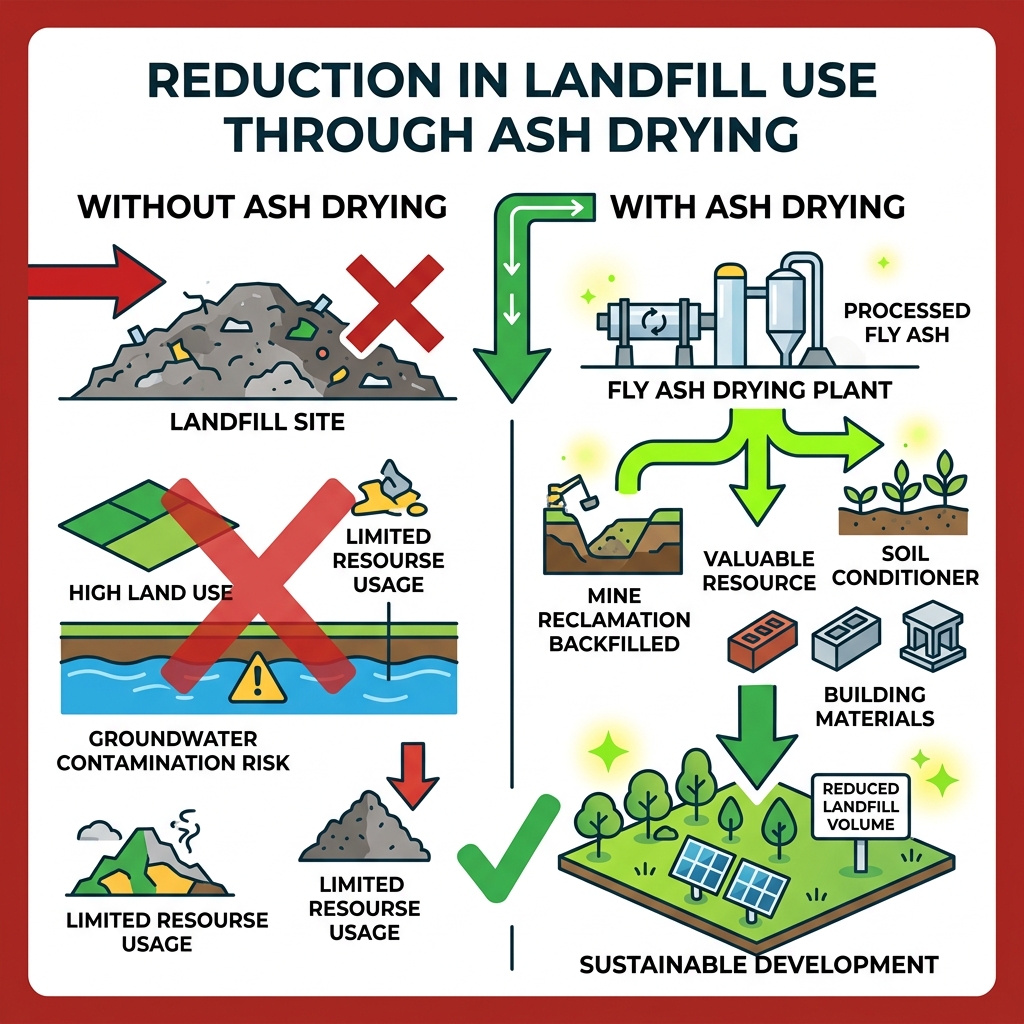
The drive towards sustainability is profoundly reshaping industrial practices, with fly ash drying emerging as a key technology for environmental protection and resource recovery. By processing and repurposing fly ash, industries significantly reduce the volume of waste sent to landfills and ash ponds, mitigating land use impacts and potential groundwater contamination. This transformation of a hazardous waste into a valuable resource aligns perfectly with circular economy principles.
Processed fly ash finds diverse applications that contribute to environmental benefits, such as mine reclamation, where it can be used to backfill depleted mines, stabilizing the land and promoting ecological restoration. It also serves as an effective soil conditioner, improving soil structure and nutrient retention in agricultural settings. The innovation in building materials using fly ash—from cement and concrete to bricks and lightweight aggregates—underscores its potential to reduce the environmental footprint of the construction industry. As we look to April 2026 and beyond, the continued development of fly ash drying technologies promises to unlock even greater potential for sustainable development.
Future Trends in Thermal Engineering
The field of thermal engineering, particularly concerning fly ash dryers, is poised for exciting innovations. We anticipate a significant uptake in AI-driven process optimization, where artificial intelligence algorithms will analyze real-time data to predict and adjust drying parameters for maximum efficiency, energy savings, and consistent product quality. Remote fault diagnosis capabilities will become standard, allowing manufacturers to monitor equipment performance globally and troubleshoot issues proactively, minimizing downtime.
The development of high-efficiency burners, capable of utilizing a wider range of fuels and achieving near-perfect combustion, will further reduce operational costs and emissions. Carbon capture integration with drying processes is an emerging trend, aiming to reduce the carbon footprint of thermal operations. Furthermore, modular plant design will offer greater flexibility, allowing for easier scalability, relocation, and customization to specific site requirements. The adoption of advanced abrasion-resistant materials in critical components will extend equipment lifespan and reduce maintenance needs, contributing to overall operational reliability and sustainability. These trends collectively point towards a future where fly ash drying is even more efficient, environmentally friendly, and integrated into smart industrial ecosystems.
Optimizing Thermal Performance for Long-Term Reliability
Achieving long-term reliability and optimal thermal performance in fly ash drying equipment is a testament to superior engineering and manufacturing practices. This begins with heavy-duty fabrication, utilizing robust materials and construction techniques to withstand the abrasive nature of fly ash and the high temperatures involved. Custom internal flights within rotary dryers are meticulously designed to ensure efficient material transport, optimal heat exchange, and prevent material buildup, directly impacting drying efficiency and product consistency.
Trunnion drive systems, critical for rotary dryers, are engineered for durability and smooth operation, distributing the weight of the rotating drum evenly and minimizing wear. Refractory lining in combustion chambers and parts of the dryer exposed to extreme heat is essential for thermal insulation, protecting the steel shell and maintaining high internal temperatures for efficient drying. Effective thermal insulation throughout the system further reduces heat loss, improving energy efficiency. Beyond manufacturing, comprehensive field service and meticulous commissioning are vital. Expert technicians ensure proper installation, calibration, and startup, optimizing the system for its specific application. This holistic approach to design, construction, and support guarantees a long operational life and consistent, high-performance drying.
Frequently Asked Questions about Industrial Thermal Processing
We understand that investing in industrial thermal processing equipment, especially for materials like fly ash, comes with many questions. Here, we address some of the most common inquiries to provide clarity and insight into this critical industrial process.
What is the primary difference between fly ash and pond ash drying?
The primary difference lies in their initial state and moisture content. Fly ash is typically collected in a dry state from electrostatic precipitators or bag filters directly from the power plant flue gas stream. While it may still contain some moisture that needs further reduction for specific applications, its initial moisture content is relatively low. Pond ash, conversely, is reclaimed from wet storage lagoons or ash ponds, where it has been mixed with water for disposal. This means pond ash has a significantly higher initial moisture content, often requiring extensive thermal processing to reduce its moisture from typically around 20 percent down to less than 1 percent for beneficial reuse. The drying equipment and process parameters must be specifically designed to handle these differing moisture loads and material characteristics.
How do modern dryers ensure compliance with emission regulations?
Modern fly ash drying plants are engineered with sophisticated emission control systems to meet stringent environmental regulations. A common and highly effective approach involves patented cyclone cum bag filter designs. Cyclones are typically used as a primary stage to remove coarser particulate matter from the exhaust gases. Following this, bag filters, often with specialized media, capture fine particulates with very high efficiency, sometimes approaching 99.9%. These systems ensure that the exhaust air released into the atmosphere is clean and well within regulatory limits. Furthermore, by effectively capturing these fine particles, they also contribute to maximizing the recovery of usable product, enhancing the economic viability of the drying operation. Continuous emission monitoring systems are often integrated to provide real-time data, ensuring ongoing compliance.
What role does material testing play in system design?
Material testing is a foundational step in the successful design and implementation of any industrial drying system. In specialized laboratories, engineers conduct thorough analyses to determine the specific drying curves of a material, which map its moisture removal rate at various temperatures and airflows. They also assess heat sensitivity to identify the maximum temperature the material can withstand without degradation. Furthermore, testing reveals critical flow characteristics, such as stickiness, abrasiveness, and bulk density, which influence equipment design, including feeder types, internal flights, and discharge mechanisms. This comprehensive understanding ensures that the drying equipment is accurately sized for the required throughput and can consistently achieve the desired final moisture targets, minimizing risks and optimizing performance from the outset.
Conclusion
As we navigate the industrial landscape of April 2026, it is clear that industrial thermal processing remains a cornerstone of modern resource recovery. The transformation of coal combustion residuals, like fly ash and pond ash, from environmental liabilities into high-value components for the global construction industry is a testament to human ingenuity and technological advancement. By focusing on precision engineering, integrating advanced automated controls, and continually improving heat transfer efficiency, manufacturers are enabling a more sustainable industrial future. These innovations not only address pressing environmental concerns but also create economic opportunities, paving the way for a more circular and resource-efficient economy.
Veeramachineni Lalitha

I am Finance Content Writer. I write Personal Finance, banking, investment, and insurance related content for top clients including Kotak Mahindra Bank, Edelweiss, ICICI BANK and IDFC FIRST Bank. My experience details : Linkedin