

The distance between a waterfront home and its boat may be short, but getting that connection right takes careful planning. Shoreline conditions, walkway placement, and available water depth all influence how comfortably people use a dock. A practical design considers the entire route from land to open water, not just the size or appearance of the platform.
Start With the Shoreline Before Deciding Where the Dock Goes
Shoreline shape affects where a dock can sit and how people reach it. Steep banks may require elevated landings or longer walkways, while gently sloping shores can provide easier access. Soil stability also matters because erosion around shoreline supports can create problems long after installation. Water depth should be measured at different points and compared with seasonal low-water levels. A location that accommodates a boat during summer may become too shallow during a drought. Before comparing aluminum boat docks for sale, property owners should also check local restrictions on dock placement, shoreline boundaries, and permitted distances into the water.
How Should the Walkway Connect the Property to the Dock?
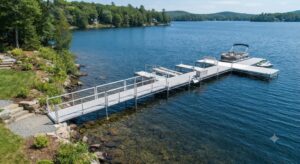
Carrying fishing equipment, coolers, and boating supplies becomes frustrating when the route to the dock includes steep steps or narrow turns. Walkways should connect naturally with existing paths while providing enough width for people to pass comfortably. Surface traction, drainage, and secure connections deserve attention, particularly on properties with frequent rain or heavy foot traffic. Floating platforms introduce another consideration because their height changes with the water. A gangway must accommodate this movement without becoming excessively steep during low-water periods. Properly designed hinges and landing areas help maintain access. Owners considering aluminum docks should also think about lighting and handrails where appropriate, especially if family members frequently use the dock after dark.
Give Boats Enough Room Beyond the End of the Dock
Boat slips need more space than the vessel’s listed length and width. Outboard motors, swim platforms, and fenders increase the clearance required for safe docking. The surrounding water must also provide enough room for turning and approaching without bringing the boat dangerously close to shallow areas or neighboring structures.
Wind direction can make certain layouts easier to use than others. A slip facing strong crosswinds may require more careful maneuvering, while a protected approach can simplify docking. Experienced floating dock builders consider these conditions when recommending straight, L-shaped, or U-shaped layouts.
Buyers researching aluminum docks for sale should compare usable slip dimensions and approach clearance rather than relying on overall platform measurements. A spacious deck offers little advantage if boats cannot enter and leave comfortably.
Match the Floating Platform to the Water Conditions
An aluminum floating dock follows changing water levels through flotation units positioned beneath its frame. These units must provide enough buoyancy to support the structure, passengers, and installed equipment while maintaining adequate deck height above the water. Uneven flotation placement can cause excessive tilting, particularly when people gather near one edge.
Anchoring equipment controls movement caused by waves, wind, and changing water elevations. Depending on the location, designers may recommend cables, guide piles, or other arrangements that allow vertical movement while limiting sideways drifting. Aluminum boat docks installed along exposed shorelines may also need stronger structural connections and additional protection from frequent wakes. Matching these components to actual site conditions helps reduce unnecessary wear and maintenance problems.
Plan the Dock Around Daily Use, Not Just Its Appearance
A dock used mainly for fishing needs a different layout from one designed for swimming, entertaining, or storing several boats. Cleat placement, boarding areas, ladders, and seating arrangements should support these activities without blocking walkways. Future plans also matter because adding a larger vessel or heavier equipment may require changes to the frame and flotation system.
Flotation Systems offers custom aluminum dock systems with floating configurations, covered boat slips, and different anchoring options for waterfront properties. Homeowners planning a new installation can consider these designs alongside their shoreline layout, boating habits, and available water depth. Matching the dock’s features to how the property will actually be used helps prevent unnecessary expenses and makes everyday waterfront access more convenient.
Veeramachineni Lalitha

I am Finance Content Writer. I write Personal Finance, banking, investment, and insurance related content for top clients including Kotak Mahindra Bank, Edelweiss, ICICI BANK and IDFC FIRST Bank. My experience details : Linkedin