

Key Takeaways
- Seasonal changes dramatically influence pest presence and behavior in the St. Louis area.
- Adapting pest-prevention strategies to each season can help minimize infestations.
- Climate trends are shifting pest patterns, leading to prolonged or more intense periods of pest activity.
Table of Contents
- Spring: Awakening of Pests
- Summer: Peak Pest Activity
- Fall: Seeking Shelter Indoors
- Winter: Indoor Infestations
- Impact of Climate Change on Pest Seasons
- Seasonal Pest Prevention Tips
Understanding how seasonal changes affect pest behavior is crucial for residents of St. Louis. The region’s unique climate causes pest activity to fluctuate throughout the year, making vigilance essential for homeowners and businesses. Collaborating with experienced professionals like Pointe Pest Control can help residents prepare for and combat these challenges. By anticipating seasonal pest patterns, St. Louisans can take timely preventive actions to avoid costly infestations.
St. Louis experiences a full range of weather conditions, from cold, snowy winters to hot, humid summers. This variability offers various pests opportunities to thrive and invade homes. Each season brings its own set of pests and concerns, all requiring specific management strategies. For those living in older homes, which are plentiful in many historic St. Louis neighborhoods, these seasonal pest patterns can be even more pronounced, as aged structures provide extra hiding spots and entry points for pests.
Considering the local environment is key to success. The combination of rivers, parks, and expansive green spaces around St. Louis not only supports a diverse range of wildlife but also attracts more pests. Homeowners and business owners need to be particularly proactive, especially in neighborhoods near the Mississippi or Missouri Rivers, where moisture-loving insects thrive.
Beyond household comfort, some pests in the area can pose medical risks or carry diseases, making year-round awareness and management essential. For further reading on how local climate affects pest risk, the Centers for Disease Control and Prevention provides insight into staying healthy in changing weather.
Spring: Awakening of Pests
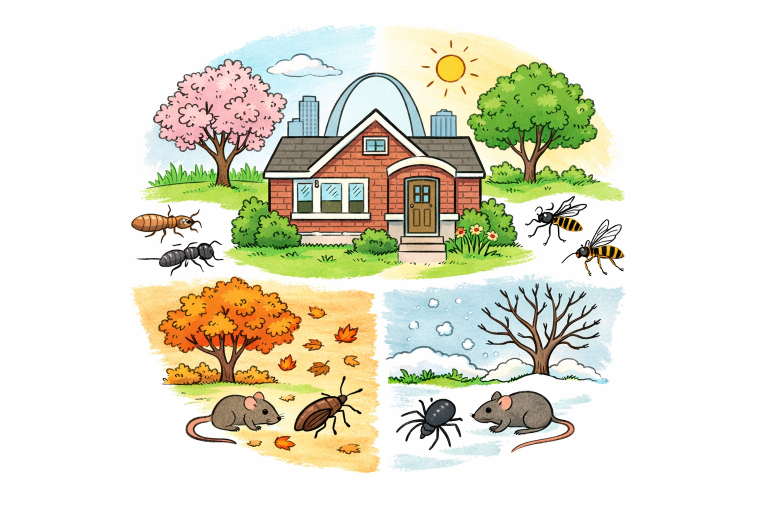
With spring’s arrival, St. Louis comes alive as warmer temperatures and increased daylight rouse pests from winter dormancy. Termites often make their presence known by swarming and searching for new nesting sites, especially in areas with older wood structures. Ants follow trails into kitchens in search of food, while mosquitoes begin breeding in any standing water left by melting snow or early rainstorms. Spring pest prevention should focus on inspecting homes or businesses for cracks and leaks that could provide pests with entry points, and on reducing conditions that attract termites and mosquitoes.
Summer: Peak Pest Activity
Summer in St. Louis means high heat and humidity, ideal conditions for many of the region’s pests. Mosquitoes flourish during these months, which is particularly concerning in neighborhoods near parks, rivers, and lakes. Increased mosquito presence can raise the risk of West Nile virus or other mosquito-borne illnesses. Wasps and hornets are also more aggressive and abundant, frequently building nests in eaves, attics, or even playground equipment. When spending time outdoors, especially at popular venues like Forest Park or the St. Louis Zoo, families should be mindful of stinging insects and take precautions to avoid attracting them.
Fall: Seeking Shelter Indoors
As nights become cooler in St. Louis, pests such as mice, rats, and cockroaches seek out warmth and shelter indoors. This migration is especially common in older city neighborhoods and in areas with abundant food sources, such as near restaurants or urban gardens. Rodents can cause structural damage and spread illness, while cockroaches may trigger allergies or asthma. Exclusion strategies, including sealing cracks and crevices and maintaining good sanitation, become especially important during this season.
Winter: Indoor Infestations
During winter, most outdoor pest activity wanes, but this does not mean residents of St. Louis can let their guard down. Rodents, spiders, and roaches may already have established themselves inside homes, garages, or commercial properties. They often go unnoticed until food supplies or nesting sites are disturbed. Regular inspections and prompt action on any signs of activity are crucial to prevent more extensive infestations and the problems they bring. Every winter, local pest control providers respond to increased calls for help as pests try to survive indoors.
Impact of Climate Change on Pest Seasons
Long-term climate patterns in Missouri are changing, with warmer winters and heavier rains becoming more frequent. These shifts allow some pests to remain active longer or start breeding earlier in the year. In St. Louis, longer mosquito seasons and the emergence of new pest species are already being observed. Weather extremes, such as floods, can also force pests like ants, roaches, and rodents into homes and commercial spaces, disrupting typical seasonal cycles and increasing the risk of infestations. You can read more about how climate change may impact pests locally at The Washington Post.
Seasonal Pest Prevention Tips
- Spring: Check windows, doors, and foundations for entry points and fix leaks to discourage termites and mosquitoes from breeding.
- Summer: Wear insect repellent outside, eliminate standing water, and keep vegetation trimmed to reduce mosquito and wasp habitats.
- Fall: Store food in sealed containers and declutter storage areas to minimize hiding spots for rodents and cockroaches as they seek indoor shelter.
- Winter: Continue regular cleaning, remove clutter, and address any water leaks to deter indoor pests from establishing colonies.
In St. Louis, a proactive approach that adjusts to the local environment and the changing seasons is essential for keeping pests in check. Whether maintaining a historic home in the Central West End or running a business in downtown St. Louis, understanding these local pest cycles and seasonal behaviors can help protect property and health year-round.
Veeramachineni Lalitha

I am Finance Content Writer. I write Personal Finance, banking, investment, and insurance related content for top clients including Kotak Mahindra Bank, Edelweiss, ICICI BANK and IDFC FIRST Bank. My experience details : Linkedin