

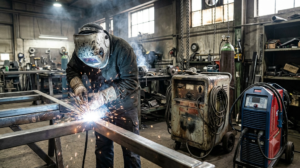
A welder that felt right two years ago can feel wrong today. Jobs change, materials change, and arc time creeps up. A short fit audit separates a machine that needs service from one that was never sized for the current load.
Your arc-on time has outgrown the rating plate
Duty cycle is the first number to check when shutdowns interrupt normal work. Under IEC 60974-1 (adopted locally as AS/NZS 60974.1) duty cycle is rated over a 10-minute period, so a machine rated 60% at 200 A is rated to weld for 6 minutes at 200 A in that window and then cool for 4 minutes. That common basis lets buyers compare plates and manuals without guesswork. It doesn’t invite a shop test that runs the machine until it cuts out.
That cut-out is a guard, not a target.
Thermal overload protection stops output when internal heat passes a safe limit, and frequent trips during ordinary passes suggest the rating no longer lines up with arc time. The same symptom can come from blocked vents or a tired fan. Don’t keep resetting and welding on. Let the machine cool with the fan running, then check the rating plate and manual for the maker’s duty curve at stated currents and air temperatures. A qualified tech can log real arc time and compare cooling and supply behavior to that curve. That check separates a service fault from a sizing gap without pushing the unit to fail.
Age alone doesn’t settle the question. A transformer-based welder can run for decades when it is clean and correctly fed, while an inverter welding machine is lighter to move and tends to hold a steadier arc at low current with less draw from the wall. What matters is whether arc-on time and weld type still fit the rating and input current the shop can spare.
The dial lives near the top end
A second sign is a current dial that rarely leaves the top end. When most welds need near-maximum output to get fusion, there’s little room left for a thicker joint or a longer pass.
That feeling alone doesn’t prove the box is too small. Joint design and fit-up change how much current a weld needs. Material condition and cleanliness matter too, along with travel speed and torch angle. A poor gap can make a large machine look weak, while a tight fit can make a mid-range setting look strong.
Run coupons in the actual metals and joint shapes used for paid work, under the same job spec where one applies, and have the result assessed by someone qualified to judge it. If sound welds need the dial pinned with no room to adjust for normal variation, sizing is tight. If sound welds sit near the middle of the range, setup or technique is more likely at fault. Keep a log of settings that worked with metal type and joint noted, which gives a supplier or tech a pattern across weeks instead of one hard day.
Wire feed problems that don’t clear with new parts
Feed trouble is easy to hear before it is easy to see. The wire stutters on start, and the arc pops and spits even when hands feel steady. In bad cases wire piles at the drive as a birdnest just after a fresh spool goes in. Fresh tips and a new liner fix many of these faults, so start there with approved consumables fitted to the maker’s guidance for wire size.
When the same fault returns right after correct installation, the wire-feed system needs a closer look. Worn drive rolls can slip under load. Wrong tension can deform wire and cause drag further down the torch, while a kinked torch can drag even with new parts inside. Supply dips during peak shop load can upset feed too, which is why random part swaps often miss the cause. A qualified tech can check roll wear and tension in one visit. The same visit can cover motor load and supply stability at the outlet.
Arc response adds another clue. Adjustable inductance or arc control lets an operator soften the MIG welding arc for thin steel or stiffen it to wet out on heavier joints, which cuts spatter and rework when the work varies widely. Many older units have fixed response that welds fine in the middle and turns harsh at the edges. That limit doesn’t mean every box needs extra controls. Short runs on clean mild steel with settled settings can still run well without them.
One process is holding up varied work
MIG welding carries most general shop work because wire feed suits speed on steel. Pressure builds when other jobs queue behind it. A frame repair may call for stick welding out of position, while a stainless rail may call for TIG welding with clean starts. A bracket job may need plasma cutting before any weld starts, which shares air and power in a tight shop and slows both tasks when space is short.
Swapping machines and leads eats time. Each swap also invites a setup slip with gas or polarity. Once the warning signs are clear, the practical next step is to compare a shortlist of unimig welders against duty needs and supply capacity for the mix now in the shop.
A multi-process welder can ease that pressure by placing MIG and stick functions in one cabinet that shares input and floor space. For stick work, check if the machine has a voltage reduction device that lowers open-circuit voltage between welds. Some versions also include TIG functions, but TIG output is model-specific and the small details decide fit. AC and DC output change what can be done on aluminum and steel. Torch type with gas control and foot control changes it further, so check required accessories before assuming coverage. High-frequency starts and pulse help on thin or cosmetic work yet they aren’t needed for every TIG task, so judge by jobs on hand.
Power supply and workshop fit feel wrong
Power fit stops work just as fast as arc faults. Many small shops run on single-phase supply with shared circuits for lights and grinders. An older transformer-based unit can draw high input current on start and on heavy welds, which can dim lights or trip a breaker when other tools run at once.
Don’t keep resetting a tripped breaker and pushing on. Heat at plugs or leads means stop. A smell of hot insulation also means stopping and isolating the machine until it is checked. Have a qualified electrician check circuit size and outlet load before the next weld. Lead length and outlet condition shape that assessment, and only that check can tell if a dedicated circuit or shorter run will fix it.
Size and weight shape daily use too. Old copper-wound units can last for years when cared for, and there’s no rule that says each one must go. Still, moving a heavy cabinet across a tight shop each day wears people down and slows setup. Awkward sockets and stiff analog dials make repeat settings hard to hold. An inverter welding machine is easier to shift and often has presets that help repeat work, yet that gain only counts when moves are frequent or jobs repeat. Match the box to the building and the body, not just the arc.
Thin metal and aluminum expose control limits
Thin sheet and aluminum reveal control limits quickly. Burn-through on auto panels points to heat that can’t be tamed at the low end. Gray starts on aluminum point the same way. Low-amperage steadiness and AC balance on suitable TIG models change how aluminum cleans and wets. Pulse can lower heat on thin edge joints for some operators.
Those aids don’t replace preparation and skill. Fit-up gaps change heat needs a lot. Dirty edges and wrong gas flow can ruin thin work on any machine, as can the wrong filler for the base metal. Skill with torch speed and angle still decides much of the result. Some jobs also carry a code or client spec that sets preparation and acceptance levels, so check that document before tuning the machine.
The fair test is a qualified demo on actual metals and joint shapes from the shop with correct accessories fitted. Safety matters during this test too. Thin and coated metals need good extraction and breathing protection suited to the task. Task training still applies for new processes. Eye and skin protection matters for arc and heat. Fire watch matters where sparks can travel. Check current work rules for fume and electrical safety before starting, and don’t weld over paint or coatings to save preparation time. Clean to bright metal where the procedure calls for it, or choose a different joint or method.
Repairs, parts and daily use add up
The last signs show in the storeroom and the diary. When tips and liners take weeks to find, each small fault brings longer downtime. When drive rolls no longer match current wire, feed suffers even with fresh parts. Approved parts fitted to the maker’s guidance keep feed and arc stable. Poor substitutes can hide the real state of the machine and waste a service call.
If support and installation help have dried up for that model, each repair takes longer than the last. Don’t judge repair against a fixed share of new price. Ask a qualified service shop for a written quote that lists parts and labor with lead time noted. Weigh that quote against full shop cost across a year. Downtime and rework account for much of that math. Energy draw and floor space account for the rest, and only real numbers for the shop can settle it.
A machine bought for weekend projects may have coped well at first. It can start to trip or drift when the shop moves to daily production with long arc time each day. Heavy weight slows moves across a tight floor. Analog-only controls slow repeat setups and add fatigue across a shift, while the lack of stored settings adds the same drag on jobs that repeat. When those frictions appear most days, the shop has outgrown the box even when the box still strikes an arc.
Fit isn’t about age or brand. It’s about steady arc time on real work without trips or strain. When that match slips, notes and a tech check point to repair or to a better-sized machine.
Veeramachineni Lalitha

I am Finance Content Writer. I write Personal Finance, banking, investment, and insurance related content for top clients including Kotak Mahindra Bank, Edelweiss, ICICI BANK and IDFC FIRST Bank. My experience details : Linkedin