

Key Takeaways
- A car payment is only one part of a realistic vehicle budget.
- Insurance, energy, taxes, maintenance, repairs, and depreciation can add hundreds of dollars to monthly ownership costs.
- A lower purchase price does not always create the lowest long-term cost.
- Your mileage, charging access, household needs, and driving conditions should guide the vehicle choice.
- A three-year and five-year comparison can make the best option easier to identify.
Buying a vehicle is easier when you look beyond the sticker price and monthly payment. Before visiting a dealership or applying for financing, build a complete budget that accounts for what happens after you drive home. You can Learn More about available vehicle options while keeping the broader cost of ownership in focus. The right car is not necessarily the cheapest one on the lot. It is the one that fits your transportation needs without placing too much pressure on your monthly cash flow, savings, or other financial priorities.
Why Total Cost Matters
Total cost of ownership means the full amount you spend to buy, operate, maintain, insure, and eventually replace a vehicle. One SUV may have a payment similar to that of a sedan, for example, but may cost more to insure, fuel, register, and repair. Over several years, those differences can matter far more than a small difference in the monthly loan payment. Separate fixed costs from variable costs. Fixed costs include the loan payment, insurance premium, registration, and parking contract. Variable costs include fuel or charging, tires, maintenance, tolls, and repairs. Reviewing both categories helps you avoid a vehicle that appears affordable at signing but becomes difficult to manage later.
The Main Cost Categories
Include every major expense in your estimate, even if it occurs only once a year or every few years.
- Purchase costs: Include the negotiated vehicle price, sales tax, title charges, registration, documentation fees, and accessories.
- Financing: Factor in the down payment, loan term, annual percentage rate, and total interest paid. A longer loan can reduce the payment while increasing the total cost.
- Insurance: Request quotes before committing. Rates depend on the vehicle, driver profile, location, coverage limits, deductible, and claim history.
- Fuel or charging: Estimate this cost using your normal commute, weekend driving, and expected annual mileage. Drivers can compare fuel economy to see how efficiency changes the operating budget.
- Maintenance and repairs: Budget for oil changes, filters, fluids, tires, brakes, inspections, batteries, and repairs after warranty coverage ends.
- Depreciation: A vehicle losing value affects future trade-in value, resale proceeds, and how much money you need for the next purchase.
How To Build A Monthly Car Budget
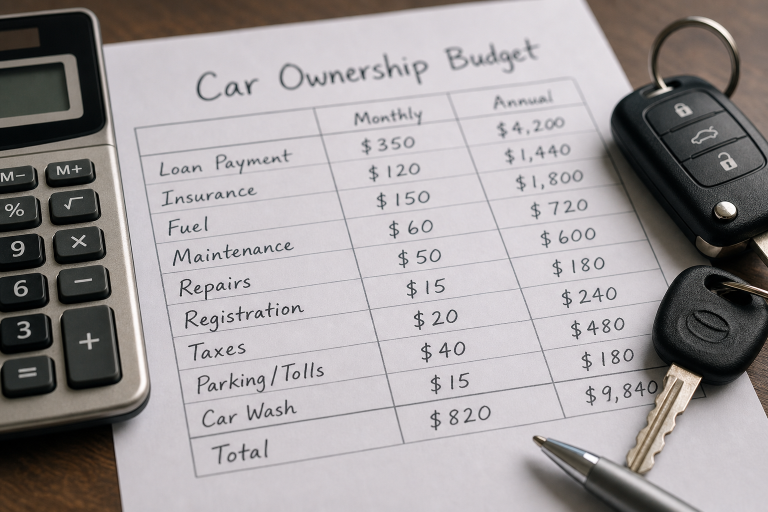
Turn irregular expenses into monthly savings targets so they do not arrive as surprises. A practical formula is: monthly ownership cost = payment + insurance + fuel or charging + maintenance savings + repair savings + registration savings + parking and tolls. For example, a buyer might pay $425 for a loan, $165 for insurance, $140 for fuel, $75 for maintenance and tires, $50 for future repairs, and $25 for registration. That $880 total is more useful than focusing on the $425 payment alone. Add car washes, roadside assistance, parking, tolls, or subscriptions if they apply to your routine.
New Versus Used: Which Costs Less?
New and used vehicles can both make sense, depending on your budget and risk tolerance. A new vehicle may offer current safety technology, warranty protection, predictable early maintenance, and more efficient powertrain choices. It may also depreciate faster during the first years of ownership. A used vehicle can lower the purchase price, reduce the loan amount, and give buyers more choices within a set budget. However, it may require more immediate maintenance or have limited warranty coverage. Review service records, mileage, vehicle history, tires, brakes, and inspection results before deciding. Check whether open safety issues exist by using the recall lookup tool with the vehicle identification number.
Gas, Hybrid, And Electric Vehicle Costs
Powertrain choice changes where your money goes. Gas vehicles offer familiar refueling and broad availability, but fuel costs rise with mileage and lower efficiency. Hybrids can reduce fuel use, particularly for drivers who spend considerable time in city traffic. Electric vehicles may reduce routine maintenance and energy costs, but buyers should consider purchase price, tire wear, insurance, battery warranty, charging access, and public charging rates.
A driver with reliable home charging and a short daily commute may reach a different conclusion than someone who regularly drives long highway trips or depends on public chargers. Compare each option using your real driving pattern rather than a general claim about which powertrain costs less.
Hidden Costs Buyers Often Miss
- Sales tax, title, registration, and dealer fees.
- Premium-fuel requirements or higher public charging prices.
- Home charging equipment, installation, or electrical upgrades.
- Winter tires, roof racks, towing gear, child seats, and cargo accessories.
- Parking fees, toll roads, commuter charges, and replacement keys.
- Software subscriptions, connected services, and repairs after warranty expiration.
Steps For Comparing Vehicles
- Write down your real needs, including passenger space, cargo room, towing, weather, parking, and commute length.
- Set a full budget instead of a payment-only budget.
- Get insurance quotes for every vehicle you are seriously considering.
- Estimate annual energy costs based on expected miles and local prices.
- Compare financing by interest rate, total interest, down payment, and payoff date.
- Review reliability history, warranties, service records, recalls, and inspection results.
- Calculate three-year and five-year costs for each finalist.
- Protect an emergency reserve rather than using every available dollar for the purchase.
Ways To Lower Ownership Costs
- Compare insurance quotes at renewal time.
- Follow the maintenance schedule in the owner’s manual.
- Keep tires properly inflated and address warning lights promptly.
- Choose the vehicle size and capability you actually need.
- Keep service records to support resale value.
- Review loan terms carefully and avoid stretching the term solely to lower the payment.
Printable Car Ownership Checklist
- ☐ Vehicle price, taxes, registration, and fees estimated
- ☐ Down payment, loan rate, and loan term compared
- ☐ Insurance quote requested
- ☐ Fuel or charging costs estimated
- ☐ Maintenance, tires, and repair savings included
- ☐ Vehicle history, warranty, and recalls reviewed
- ☐ Three-year and five-year costs compared
- ☐ Emergency savings protected
Final Thoughts
A complete ownership budget gives you a clearer and more realistic view of what a vehicle will truly cost over time. Instead of focusing only on the sticker price or monthly payment, compare financing, insurance, fuel or charging, maintenance, tires, repairs, registration, and expected resale value before making a decision. Consider your daily mileage, passenger and cargo needs, and how long you plan to keep the vehicle. A car that costs less upfront may not always be cheaper to own if it requires more fuel, incurs more expensive repairs, or has higher insurance costs. By looking at the complete financial picture before you buy, you can choose a vehicle that supports your daily routine, avoids unnecessary expenses, and remains manageable for your long-term financial goals.
Veeramachineni Lalitha

I am Finance Content Writer. I write Personal Finance, banking, investment, and insurance related content for top clients including Kotak Mahindra Bank, Edelweiss, ICICI BANK and IDFC FIRST Bank. My experience details : Linkedin