

Table of Contents
- Powering Pneumatic Tools
- Automating Assembly Lines
- Material Handling and Conveying
- Painting and Coating
- Heating and Cooling Processes
- Cleaning and Maintenance
- Energy Efficiency and Cost Savings
- Integration with Smart Manufacturing
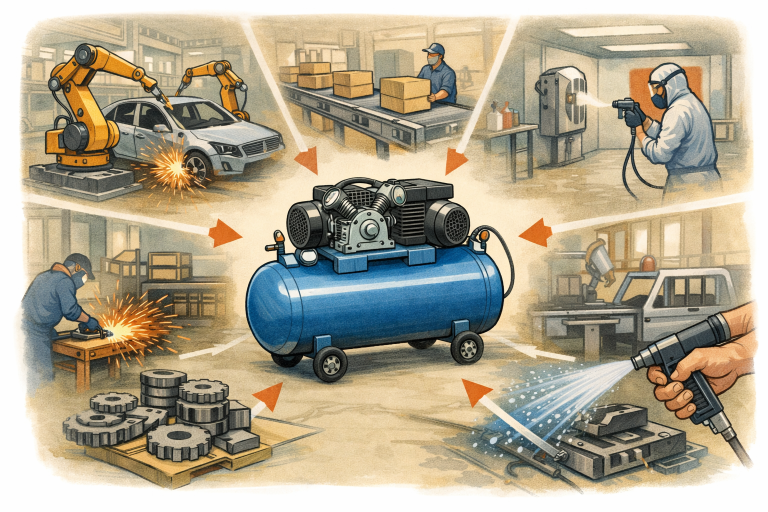
Industrial air compressors drive productivity and efficiency across a wide range of manufacturing applications. These devices are often considered the backbone of factory floors, enabling everything from basic tool operation to advanced automation. Their impact extends far beyond just powering equipment; industrial compressors ensure consistent production, reduce overhead costs, and contribute to improved product quality. Learn more about choosing the right compressor for your facility to maximize operational reliability.
As factories demand more precision, speed, and flexibility, the advantages of using industrial air compressors become even more significant. Compressed air powers tasks like assembly, cleaning, painting, and even climate control, all of which are vital processes in a modern manufacturing environment. As new technologies and smart systems are integrated, these compressors evolve, making them indispensable assets in the race for efficiency and competitiveness.
Powering Pneumatic Tools
Pneumatic tools are a staple on any manufacturing floor, and compressed air serves as their primary power source. Tools like drills, riveters, and impact wrenches powered by industrial air compressors are favored in high-volume operations because they deliver reliable torque, speed, and efficiency. For example, in the automotive sector, pneumatic equipment is used to ensure uniform assembly, contributing to consistent product quality and faster build times.
Additionally, pneumatic tools generally require less maintenance compared to their electric counterparts, since they have fewer moving parts and generate less heat. This not only lowers maintenance costs but also translates to reduced downtime and higher workplace safety. In heavy industries where productivity depends on continuous and uninterrupted operations, the reliability of pneumatic tools powered by industrial compressors makes a substantial difference to the bottom line.
Automating Assembly Lines
Industrial air compressors make assembly line automation possible by energizing robotic arms and actuators. This automation increases throughput and repeatability, minimizing human error and ensuring the reliability essential for industries like electronics manufacturing, pharmaceutical production, and automotive assembly. Compressed air systems can quickly adapt to variable production needs, making them vital for flexible manufacturing environments.
Modern assembly lines utilize adaptive pneumatic automation to achieve even greater levels of customization. As markets demand product variety and fast turnaround times, the scalability offered by compressed air-driven robots and machinery becomes invaluable. Manufacturers can swiftly shift between product runs without major process overhauls, improving overall production agility and enabling mass customization, a growing trend in global manufacturing.
Material Handling and Conveying
Efficient movement of raw materials and finished goods is critical to keeping manufacturing workflows running smoothly. Industrial air compressors power pneumatic conveyors, lifts, and handling equipment, helping to transport products quickly and hygienically. This is especially important in the food and beverage sector, where cleanliness and safety regulations are rigorous. Compressed air-based systems reduce manual handling and potential bottlenecks, offering a seamless solution for manufacturers.
The adaptability of pneumatic conveying systems also reduces the risk of cross-contamination, as they can be designed with closed systems that keep materials isolated from the environment. Not only does this enhance product quality and safety, but it also allows manufacturers to maintain compliance with stringent regulatory standards—a critical concern in industries such as pharmaceuticals and food processing.
Painting and Coating
Consistent and high-quality finishes are essential in industries ranging from automotive to consumer goods. Air compressors deliver the controlled pressure needed for spray painting and coating, ensuring an even layer without streaks or imperfections. Properly applied coatings not only improve aesthetics but also protect products from corrosion, extending their lifecycle and customer satisfaction. According to ScienceDirect, innovations in compressed air delivery continue to enhance painting efficiency and sustainability.
In sectors where precise color matching and durability are essential, such as aerospace or medical device manufacturing, uniform application is critical. Advanced compressor systems enable the integration of automated painting robots, further boosting consistency and reducing waste. With environmental regulations tightening, using compressed air for accurate, minimal-overspray processes also helps factories stay compliant with green manufacturing requirements.
Heating and Cooling Processes
Maintaining ideal temperatures during production is a common challenge in many manufacturing environments. Industrial air compressors support both heating and cooling systems, either by driving heat exchangers for molding and welding, or by operating chillers and cooling devices to prevent machinery from overheating. Their adaptability across functions allows manufacturers to remain agile and efficient even when faced with fluctuating production requirements.
Temperature regulation not only safeguards equipment but also stabilizes sensitive production phases, such as chemical processing or electronics assembly. By supporting climate control systems, air compressors help narrow the margin for temperature variation, minimizing quality defects and waste. Many manufacturers also use air compressors for dehumidification processes, ensuring production environments remain dry and conducive to consistent output—further supporting resilience and quality assurance at every stage.
Cleaning and Maintenance
Regular cleaning and maintenance help prevent unscheduled downtime and extend machinery lifespan. Many factories use compressed air for clearing dust, debris, and contaminants from equipment and work zones. High-pressure air jets can access hard-to-reach areas, ensuring that sensitive electronics or moving parts remain free from buildup that could reduce operational efficiency. Clean workspaces also contribute to safer manufacturing environments, protecting workers and equipment alike.
Moreover, compressed air systems can be integrated into automated cleaning operations, such as air knives or blow-off nozzles, which improve throughput while minimizing manual labor. This type of maintenance not only maintains machine performance but also lowers the likelihood of operational hazards, supporting both safety compliance and productivity. Periodic use of compressed air for preventative maintenance can be a crucial part of a comprehensive reliability strategy for many manufacturers.
Energy Efficiency and Cost Savings
Advanced air compressors are designed with energy conservation in mind. Technologies like variable speed drives (VSDs) allow the compressor to adjust output precisely according to demand, curbing unnecessary energy use. Plants adopting VSD compressors have reported energy reductions of up to 35 percent. Additionally, systems that recover waste heat generated during air compression can repurpose it for heating offices or production areas, generating further savings. For more on industrial efficiency and best practices, visit energy.gov.
Investing in modern compressors with eco-friendly features is becoming the norm, not just a best practice. Smart monitoring and leak detection algorithms help facilities identify and address inefficiencies immediately. By taking a proactive approach to air management, companies not only shrink their energy bills but also reduce their carbon footprint, supporting broader sustainability initiatives.
Integration with Smart Manufacturing
The digital transformation of manufacturing (known as Industry 4.0) incorporates air compressors as interconnected smart devices. Today’s compressors provide real-time data on performance and maintenance, automatically alerting teams to potential issues before they become critical. Integration with factory management systems allows predictive maintenance scheduling, reducing unplanned downtime and enhancing equipment longevity. Compressors equipped with OPC UA capabilities can easily communicate with robots, sensors, and other connected machinery, supporting a harmonized, data-driven factory ecosystem.
As factories scale toward lights-out manufacturing, where production is fully automated and requires minimal human intervention, intelligent compressors support round-the-clock reliability. Remote monitoring, cloud connectivity, and AI-powered analytics are rapidly becoming industry standards, empowering facilities to respond faster to changes, capitalize on predictive insights, and realize continuous improvements in every aspect of manufacturing.
Industrial air compressors are fundamental to driving today’s manufacturing technologies. Their reliability, adaptability, and increasingly smart features help deliver efficiency gains, cost control, and consistent product quality across numerous industries.
Veeramachineni Lalitha

I am Finance Content Writer. I write Personal Finance, banking, investment, and insurance related content for top clients including Kotak Mahindra Bank, Edelweiss, ICICI BANK and IDFC FIRST Bank. My experience details : Linkedin