

Groundwater and Water Quality Investigation Tools

The health of our environment and communities often depends on what we can’t see. Hidden contaminants in soil and water can pose serious risks. This is why Environmental Site Assessments (ESAs) are so critical. They help us uncover potential hazards and make informed decisions about land use and environmental safety.
To conduct these crucial assessments, we rely on a diverse range of specialized tools and techniques. Accurate data collection starts with choosing high-quality environmental equipment. Our comprehensive guide will explore these essential tools.
We will delve into various types of equipment, including those used for groundwater and water quality investigations. Here, tools like water pumps and submersible pumps play a crucial role. We will also cover air and soil vapor monitors, geophysical survey instruments, and direct investigation tools for sampling. By understanding these instruments, we aim to equip you with the knowledge to conduct thorough and compliant environmental projects.

Groundwater and surface water are often primary pathways for contaminant migration, making their investigation a cornerstone of any thorough ESA. Our goal in these investigations is to accurately characterize the presence, concentration, and movement of potential pollutants. This involves precise groundwater sampling, measuring various water quality parameters, and conducting aquifer tests to understand hydrogeological conditions. Maintaining sample integrity throughout this process is paramount to ensuring the reliability of our findings.
Water Level and Interface Meters
Understanding the behavior of groundwater is fundamental to environmental assessments. Water level meters are indispensable for determining the static water level in monitoring wells, providing a baseline for hydrological studies. When pumping, these meters help us measure drawdown, which is the reduction in water level caused by extraction, crucial for aquifer testing and pump sizing.
In situations where non-aqueous phase liquids (NAPLs) – such as petroleum products (light non-aqueous phase liquids or LNAPLs) or chlorinated solvents (dense non-aqueous phase liquids or DNAPLs) – are present, interface probes become essential. These specialized meters can detect and measure the thickness of these immiscible layers floating on or sinking below the water table. This data is critical for understanding contaminant distribution and designing effective remediation strategies.
Water Quality Meters
Beyond just the presence of water or contaminants, the intrinsic quality of the water itself provides vital clues about the subsurface environment. Multi-parameter meters are versatile tools that allow us to simultaneously measure several key water quality indicators directly in the field. These typically include:
- pH: Indicates the acidity or alkalinity of the water, influencing contaminant solubility and mobility.
- Conductivity: Measures the water’s ability to conduct electricity, which is directly related to the concentration of dissolved ions (salts). Lifted conductivity can suggest contamination.
- Dissolved Oxygen (DO): Crucial for understanding biological activity and redox conditions, which impact the fate and transport of many contaminants.
- Turbidity: Measures the cloudiness or haziness of water caused by suspended particles, an indicator of sediment load or potential disturbance.
- Oxidation-Reduction Potential (ORP): Reflects the tendency of a chemical species to acquire electrons and thereby be reduced, or to lose electrons and thereby be oxidized. This is crucial for evaluating the potential for natural attenuation or the effectiveness of specific remediation approaches.

Groundwater Sampling Pumps
Collecting representative groundwater samples is a delicate process that requires specialized equipment to minimize disturbance and ensure the integrity of the samples. Our approach often involves low-flow sampling techniques, which aim to collect samples with minimal drawdown and turbidity, thus reducing the need for extensive purging. Purging, the process of removing stagnant water from a well before sampling, is still necessary in many scenarios to ensure the sample reflects aquifer conditions.
A variety of pumps are employed for groundwater sampling and dewatering, each with specific advantages:
- Peristaltic Pumps: These pumps are excellent for low-flow sampling from shallow wells (typically up to 25-30 feet). They operate by squeezing a flexible tube, drawing water without the pump mechanism contacting the sample, which is ideal for maintaining sample integrity.
- Bladder Pumps: Designed for low-flow sampling in deeper wells, bladder pumps utilize compressed air to push water out of a flexible bladder gently. Like peristaltic pumps, the sample does not come into contact with the pumping mechanism, making them suitable for collecting volatile organic compounds (VOCs).
The Role of Submersible Pumps in ESAs
Submersible pumps are specifically designed to be fully immersed in the fluid they are pumping. This design offers several distinct advantages over other pump types:
- Efficiency: Being submerged, they don’t need to “pull” water up; instead, they only need to “push” it, which is more energy-efficient, especially for deep wells or high-head applications.
- Self-priming: They are inherently self-priming, as they are already submerged in water.
- Quiet Operation: The water surrounding the pump absorbs noise, making it more peaceful than above-ground pumps.
- Space-saving: They take up no surface space, which can be beneficial on crowded sites.
- Durability: Often constructed from robust, corrosion-resistant materials such as stainless steel, they are designed to withstand harsh environments. Franklin Electric, for instance, offers submersible well pumps with proven components “able to withstand the harshest environments.”
Types and Applications of Submersible Pumps
The versatility of submersible pumps means they come in various types, each suited for particular applications:
- Well Pumps: These are designed to draw water from deep wells for potable water supply, irrigation, or industrial use. Manufacturers like Franklin Electric and Grundfos offer a wide range, including residential duty, high-capacity radial pumps, and even artificial lift pumps. For example, the Grundfos SP series boasts a performance range up to 1,400 GPM and 2,100 feet of head, constructed from 100% stainless steel for durability and resistance to sand and aggressive water.
- Sump Pumps: Primarily used in residential and commercial settings to remove groundwater from basements and crawlspaces, preventing flooding. They can be fully submerged and often feature automatic float switches.
- Utility Pumps: These are highly portable and versatile, used for removing water from flooded areas, spas, window wells, or even emptying tanks. The Drummond 1/3 HP Submersible Utility Pump, for instance, can drain to within 1/4 inch of the water’s surface and offers a maximum flow of 2000 GPH with a total head lift of 31 feet.
- Sewage Pumps: Engineered to handle solids, these pumps lift household or industrial sewage water from collection basins to gravity-fed sewage lines or septic systems. Tsurumi’s UT(Z) Series is an example of cast iron sewage/wastewater pumps with significant passages for solids.
- Fountain and Pond Pumps: Designed for continuous operation in decorative water features, these pumps often have specific aesthetic and flow characteristics that enhance the overall appearance of the feature.
Key Features to Consider
When selecting a submersible pump for an ESA or any application, several key features demand attention:
- Horsepower (HP): Determines the power of the motor and its ability to move water.
- Flow Rate (Gallons Per Minute – GPM or Gallons Per Hour – GPH): Indicates the volume of water the pump can move over a period.
- Total Dynamic Head (TDH): This is the maximum vertical distance the pump can push water, accounting for friction losses in the piping. A “Head versus Flow chart” is crucial here, illustrating how a pump’s output flow decreases as it expends more power to lift water to a higher level or overcome friction. Understanding this chart is vital for selecting a pump that meets the site’s specific requirements.
- Material: The pump’s construction material (e.g., plastic, cast iron, stainless steel) must be compatible with the liquid being pumped, especially in contaminated environments. For instance, the Aquatec SWP pumps are made with high-grade, potable water-safe materials.
- Power Source Options: Submersible pumps can be powered by a variety of sources. AC (alternating current) pumps are standard for grid-connected applications. DC (direct current) pumps, often operating at 12V DC or 24V DC, are ideal for remote or off-grid locations, frequently paired with solar panels. Aquatec SWP pumps, for example, are designed to operate from any 12-30 VDC power source, including solar modules or battery banks.
- Solids Handling: For applications involving turbid water or sewage, the pump’s ability to pass solids without clogging is critical.
- Automatic Operation: Many pumps include float switches for automatic on/off operation based on water levels.
Common Issues and Troubleshooting
Even robust submersible pumps can encounter issues. Common problems include:
- Pump not starting/running: Check power supply, circuit breakers, and float switch operation.
- Pump running but no water flow (Airlock): An airlock can occur when air is trapped around the impeller, preventing pumping. For utility pumps, tilting can release the air. For sump/sewage pumps, a small vent hole in the discharge pipe, located above the pump and below the check valve, can prevent airlocks.
- Low or no water delivery: This can be caused by a clogged intake screen, a jammed impeller, a kinked hose, an excessive head lift that exceeds the pump’s capacity, or a low voltage.
- Pump cycling too frequently often indicates a faulty check valve that allows backflow or an improperly adjusted float switch.
- Thermal overload tripping: The motor’s thermal protector will shut off the pump if it overheats, which can be caused by low voltage, a clogged impeller, or operating against too much resistance.
Regular inspection, keeping intake screens clear, and ensuring proper discharge pipe sizing (e.g., not reducing the size below 1-1/4″ as per Flotec manuals) are key to preventing many of these issues.
Maintenance Requirements
Submersible pumps generally require minimal maintenance due to their sealed design. However, periodic checks are vital:
- Cleanliness: Keep the pump intake screen free of debris.
- Connections: Inspect hoses and electrical connections for wear or damage.
- Sump Pit: For sump pumps, ensure the pit is clean and free of sediment build-up.
- Thermal Protection: If the thermal protector trips repeatedly, investigate the underlying cause rather than just resetting it.
By understanding the diverse capabilities and considerations for submersible pumps, we can effectively manage water in various environmental assessment and remediation scenarios.
Essential Air and Soil Vapor Environmental Monitoring Equipment
Beyond water, understanding air quality and soil vapor conditions is crucial for assessing potential human health risks and environmental impacts, particularly in relation to vapor intrusion pathways. Soil gas surveys help us detect volatile organic compounds (VOCs) and other hazardous gases that can migrate from contaminated subsurface sources into overlying buildings.
Photoionization Detectors (PIDs)
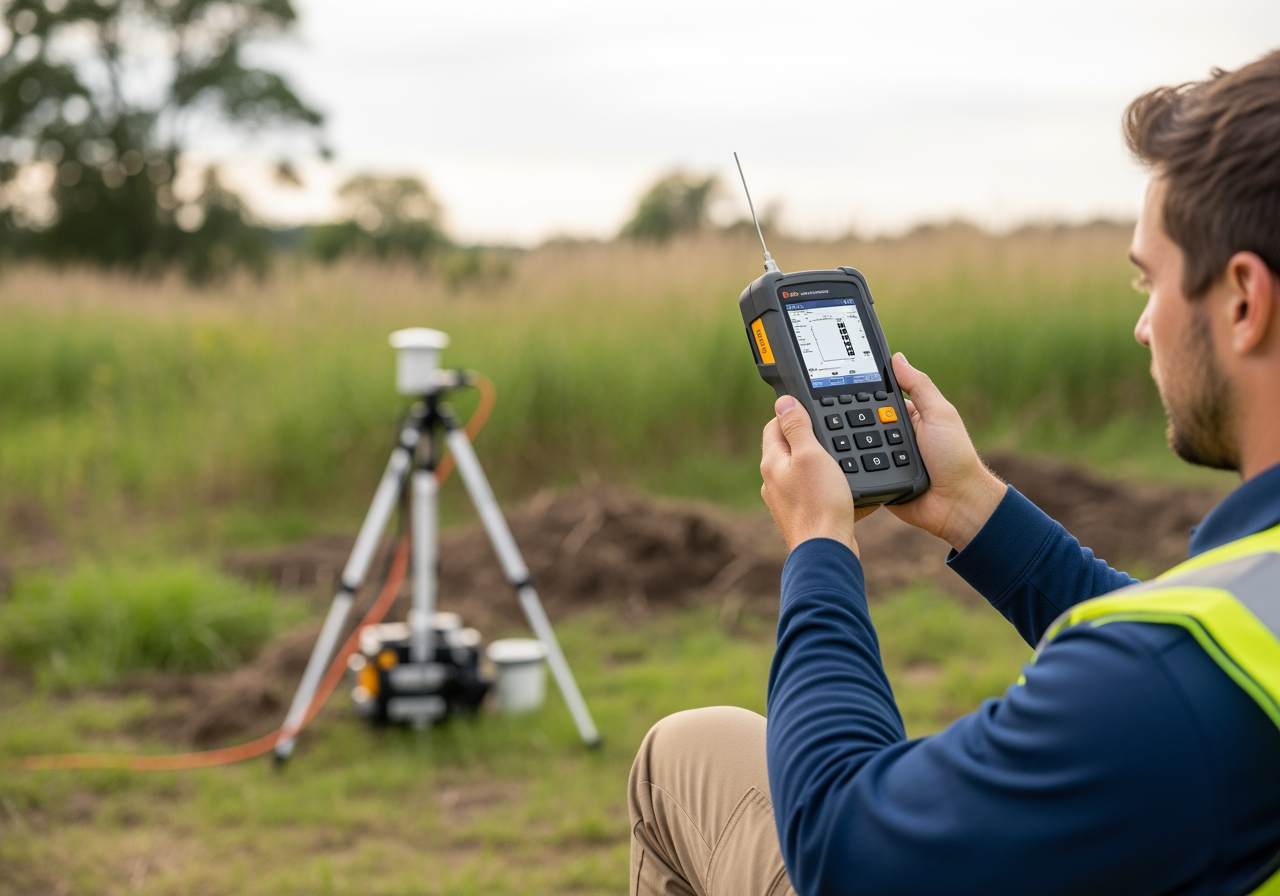
Photoionization Detectors (PIDs) are highly sensitive instruments used for rapidly detecting and measuring VOCs in air and soil vapor. They work by using ultraviolet (UV) light to ionize molecules, which then produce an electrical current proportional to the concentration of the VOCs.
- VOC Detection: PIDs are excellent for screening for a wide range of organic compounds, including petroleum hydrocarbons, solvents, and some pesticides.
- Sensitivity: They can detect contaminants at very low levels, typically in parts-per-million (ppm) and even parts-per-billion (ppb) ranges, making them ideal for identifying hot spots or delineating plumes.
- Calibration: Regular calibration with a known gas (e.g., isobutylene) is essential to ensure accurate readings.
- Screening Tools: While PIDs provide real-time concentration data, they are primarily screening tools. They don’t identify specific compounds but rather a total concentration of ionizable compounds. For compound-specific identification, laboratory analysis of collected samples is required.
Multi-Gas Monitors for Safety and Screening
In addition to VOCs, other gases pose immediate safety risks or indicate specific environmental conditions. Multi-gas monitors are indispensable for both safety and initial screening during ESAs, especially when dealing with confined spaces.
- Confined Space Entry: Before entering confined spaces (e.g., maintenance holes, tanks, trenches), these monitors are mandatory to ensure the atmosphere is safe.
- Lower Explosive Limit (LEL): Measures the concentration of flammable gases or vapors in the air, indicating the risk of explosion.
- Oxygen (O2): Detects oxygen deficiency (which can lead to asphyxiation) or enrichment (which increases fire risk).
- Hydrogen Sulfide (H2S): A highly toxic gas often associated with decaying organic matter or specific industrial processes.
- Carbon Monoxide (CO): A toxic gas produced by incomplete combustion, often found in areas with vehicle exhaust or faulty heating systems.
Devices like the RKI GX series (e.g., GX Force, GX 6000, GX 2009) or Rae Systems MultiRAE and QRae 3 offer robust multi-gas detection capabilities, providing real-time data and alarms for critical safety parameters.
Selecting the Right Air Environmental Monitoring Equipment
Choosing the appropriate air and soil vapor monitoring equipment involves several considerations:
- Target Contaminants: What specific compounds or gas types are we expecting to find? This dictates the type of sensor required (e.g., PID for VOCs, electrochemical sensors for specific toxic gases).
- Detection Limits: What level of sensitivity is needed? Some projects require ppb-level detection, while others may only require ppm-level detection.
- Intrinsic Safety: For potentially explosive atmospheres, equipment must be intrinsically safe, meaning it’s designed to prevent ignition.
- Data Logging: The ability to log data over time is crucial for trend analysis, compliance reporting, and establishing baseline conditions.
- Rental vs. Purchase: For specialized equipment used infrequently, renting can be a cost-effective solution, providing access to the latest technology without the upfront capital expenditure.
Geophysical Surveys for Non-Invasive Site Characterization
Geophysical surveys provide a powerful, non-invasive means of investigating subsurface conditions without disturbing the ground. These techniques are invaluable for subsurface mapping, utility locating, anomaly detection, and general non-destructive testing, providing crucial preliminary data that can guide more intrusive investigations. When undertaking these surveys, ensuring we use high-quality environmental equipment is paramount for accurate and reliable results.
Ground Penetrating Radar (GPR)
Ground Penetrating Radar (GPR) is a versatile geophysical method that uses radar pulses to image the subsurface. It’s akin to an X-ray of the ground, allowing us to “see” buried objects and geological features.
- Locating USTs: GPR is highly effective for locating underground storage tanks (USTs), which are a common source of soil and groundwater contamination.
- Mapping Buried Drums: This technology can identify the presence and location of buried drums or other containers that may contain hazardous waste.
- Identifying Soil Stratigraphy: GPR can delineate different soil layers, bedrock, and water tables, providing insights into subsurface geology.
- Concrete Scanning: It’s also used for scanning concrete structures to locate rebar, conduits, and post-tension cables before drilling or cutting. Systems such as the GPR UtilityScan System or SIR 3000/4000 data acquisition units are frequently used for these tasks.
Magnetometers and EM Locators
Magnetometers and Electromagnetic (EM) locators are used to detect metallic objects and map subsurface conductivity variations.
- Ferrous Metal Detection: Magnetometers detect variations in the Earth’s magnetic field caused by ferrous (iron-containing) metals. This makes them excellent for locating buried ferrous materials, such as drums, pipelines, wellheads, and other metallic debris. Schonstedt GA series locators (e.g., GA 52cx, GA 92xtd) are widely used for this purpose.
- Utility Tracing: EM locators, such as the Radiodetection RD8000/8100, are used to trace buried utility lines (power cables, communication lines, metallic pipes) by detecting electromagnetic fields either naturally present or induced by a transmitter.
- Electromagnetic Induction: EM methods can also be used to map subsurface conductivity, which can indicate changes in soil type, groundwater salinity, or the presence of conductive contaminant plumes.
These non-invasive techniques allow us to quickly and efficiently gather valuable subsurface information, reducing the need for extensive and costly intrusive investigations and minimizing site disturbance.
Direct Investigation: Drilling, Sampling, and Inspection
While non-invasive methods provide valuable insights, direct investigation techniques are often necessary to obtain physical samples of soil, sediment, and rock, as well as to inspect subsurface conditions visually. These methods provide definitive data on the presence, concentration, and geological characteristics of contaminants.
Soil and Sediment Sampling Tools
Collecting representative soil and sediment samples is critical for characterizing contamination. The choice of tool depends on soil type, depth, and the contaminants of concern.
- Hand Augers: Simple, manually operated tools used for shallow soil sampling, particularly in soft, unconsolidated soils. The AMS Bucket Auger is a typical example.
- Direct-Push Samplers: These systems (e.g., Geoprobe Manual Sampling Kit) advance a sampling tool into the ground using hydraulic force, collecting continuous core samples with minimal disturbance. They are fast and efficient for a wide range of soil types.
- Split-Spoon Samplers: Used in conjunction with drilling rigs, these samplers are driven into the ground to collect disturbed but representative soil samples for geotechnical and environmental analysis.
- Sediment Dredges: For sampling sediments from the bottom of water bodies (lakes, rivers, ponds), specialized dredges, such as the AMS Eckman or Ponar Style, are used to collect samples. Proper sample collection protocols, including decontamination between samples, are essential to prevent cross-contamination and ensure data quality.
Downhole and Borehole Cameras
Visual inspection of boreholes and wells provides invaluable information that cannot be obtained through sampling alone. Downhole and borehole cameras offer a direct view of subsurface conditions.
- Well Integrity: Cameras can inspect the structural integrity of well casings, identifying cracks, perforations, or blockages that could compromise the well.
- Casing Inspection: This allows for a detailed examination of the casing material, joints, and screen sections.
- Fracture Identification: In bedrock, cameras can identify fractures, fissures, and other geological features that influence groundwater flow and contaminant transport.
- Borehole Video: Real-time or recorded video footage provides a permanent record of subsurface conditions, aiding in the interpretation of geological logs and the distribution of contaminants. The Well Vu 500ft Fisheye Camera or Laval R-Cam 1000 XLT Portable Borehole Camera are examples of specialized equipment used for these detailed downhole inspections.
Frequently Asked Questions about ESA Equipment
What is the main difference in equipment for a Phase I vs. a Phase II ESA?
The distinction between Phase I and Phase II Environmental Site Assessments lies fundamentally in their scope and, consequently, the equipment required for each.
- Phase I ESA: This is a non-intrusive assessment focused on identifying potential or actual environmental contamination liability. The equipment used is primarily for visual inspection, reviewing historical records, and non-invasive reconnaissance. This includes tools like binoculars, cameras, GPS devices for site mapping, and basic field notebooks. The goal is to identify Recognized Environmental Conditions (RECs) without disturbing the site.
- Phase II ESA: If RECs are identified in Phase I, a Phase II ESA is conducted to confirm the presence or absence of contamination and to quantify its extent. This phase is intrusive and involves direct sampling and testing. Therefore, it requires a much more extensive array of equipment, including:
- Drilling equipment: For soil borings and the installation of groundwater monitoring wells.
- Groundwater sampling pumps include submersible pumps, peristaltic pumps, and bladder pumps.
- Water quality meters: For field parameters like pH, conductivity, DO, ORP, and turbidity.
- Soil and sediment sampling tools: Like direct-push samplers, split-spoon samplers, and hand augers.
- Air and soil vapor monitors: PIDs and multi-gas monitors.
- Decontamination equipment: To prevent cross-contamination of samples.
- Sample preservation and transport supplies Include Vials, coolers, and chain-of-custody forms.
Phase I relies on observation and documentation, while Phase II depends on physical evidence gathered through intrusive investigation.
What safety equipment is mandatory for a site assessment?
Safety is paramount during any environmental site assessment, especially when dealing with potentially hazardous materials or working in challenging environments. Mandatory safety equipment, often referred to as Personal Protective Equipment (PPE), is selected based on a site-specific health and safety plan (HASP) and can include:
- Head Protection: Hard hats are essential to protect against falling objects or impacts.
- Eye Protection: Safety glasses or goggles shield against splashes, dust, and flying debris.
- Hand Protection: Chemical-resistant gloves (e.g., nitrile, neoprene) are crucial when handling samples or potentially contaminated materials. General work gloves protect against cuts and abrasions.
- Foot Protection: Steel-toed boots protect against heavy objects and punctures, while chemical-resistant boots are crucial in wet or contaminated areas.
- Body Protection: Tyvek coveralls or other chemical-resistant suits protect clothing and skin from contaminants. High-visibility safety vests are required when working near traffic or heavy machinery.
- Respiratory Protection: Respirators (e.g., N95 masks, half-face, or full-face respirators with appropriate cartridges) may be necessary if airborne contaminants are present or anticipated.
- Hearing Protection: When working around noisy equipment, such as drilling rigs or generators, earplugs or earmuffs are necessary for protection.
- Gas Monitors: Personal multi-gas monitors are mandatory for confined space entry or in areas where toxic or explosive gases may be present.
- First Aid Kit: A well-stocked first aid kit should always be readily available.
This list is not exhaustive, and specific site conditions may require additional specialized PPE. Adherence to safety protocols and proper training is as critical as the equipment itself.
How do you ensure the quality of samples collected in the field?
Ensuring the quality and representativeness of samples collected in the field is fundamental to the integrity of an ESA. Several rigorous protocols are followed:
- Proper Sampling Technique: Using the correct sampling method for the matrix (soil, water, air) and target analytes is crucial. For groundwater, this often means employing low-flow techniques with pumps, such as bladder or submersible pumps, to minimize turbidity and volatilization.
- Decontamination: All reusable sampling equipment (e.g., probes, augers, pump tubing) must be thoroughly decontaminated between each sample location to prevent cross-contamination. This typically involves a multi-step wash-and-rinse procedure using detergents, distilled water, and sometimes acid rinses.
- Sample Preservation: Once collected, samples must be immediately preserved according to laboratory specifications. This often involves adding chemical preservatives, chilling samples to 4°C, and minimizing headspace in sample vials, especially for VOCs.
- Appropriate Containers: Using the correct type of sample container (e.g., glass vials for VOCs, plastic bottles for metals) and ensuring they are clean and free of contaminants is vital.
- Dedicated Tubing: For groundwater sampling, dedicated or single-use tubing is often employed to eliminate the risk of cross-contamination and the need for field decontamination.
- Chain of Custody (COC): A strict chain of custody protocol must be maintained from the moment a sample is collected until it reaches the analytical laboratory. This detailed documentation ensures the sample’s integrity and traceability, providing legal defensibility for the data.
- Field QC Samples: Collecting various field quality control (QC) samples, such as field blanks, equipment blanks, duplicate samples, and matrix spike/matrix spike duplicates, helps assess potential contamination from sampling procedures and the precision of the data.
By carefully adhering to these practices, we can confidently ensure that the data obtained from field samples is accurate, reliable, and legally defensible.
Conclusion
Environmental Site Assessments are complex undertakings that demand precision, expertise, and, crucially, the right tools. From the initial non-invasive reconnaissance of a Phase I ESA to the intricate sampling and analysis of a Phase II, each step relies on specialized equipment to gather accurate and reliable data. Whether we are measuring groundwater levels with an interface meter, analyzing water quality with multi-parameter probes, or collecting samples with robust submersible water pumps, the quality of our equipment directly impacts the integrity of our findings.
The integration of advanced technologies, such as PIDs for air quality screening, GPR for subsurface mapping, and downhole cameras for visual inspection, empowers us to conduct more thorough and efficient investigations. Furthermore, strict adherence to safety protocols and meticulous sample collection and preservation techniques are non-negotiable elements that safeguard both personnel and data quality.
By understanding the capabilities and applications of this diverse array of environmental equipment, we can ensure that our assessments are comprehensive, our data is defensible, and our recommendations lead to effective and compliant ecological management. The success of any environmental project hinges on the foundation laid by accurate site characterization, a task made possible by high-quality environmental equipment.
Veeramachineni Lalitha

I am Finance Content Writer. I write Personal Finance, banking, investment, and insurance related content for top clients including Kotak Mahindra Bank, Edelweiss, ICICI BANK and IDFC FIRST Bank. My experience details : Linkedin