

Key Takeaways
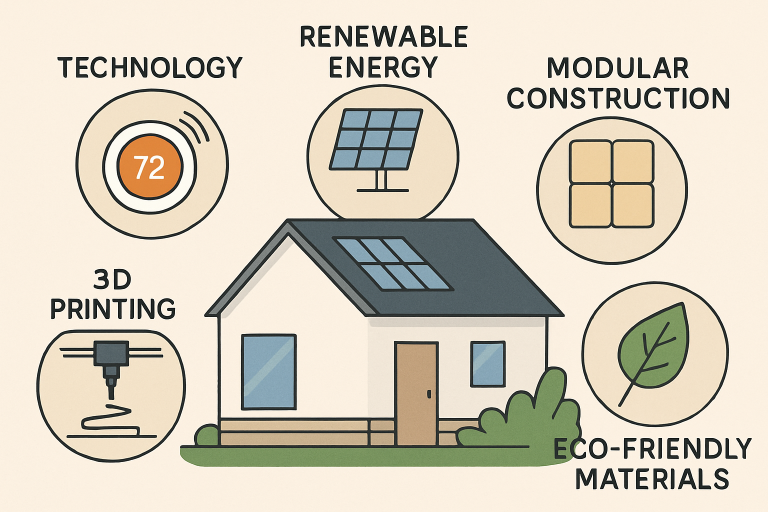
- Smart home integration is creating more convenient, energy-efficient living spaces.
- Modular and prefabricated construction methods enable faster, cleaner home builds.
- 3D printing delivers cheaper, customizable homes and addresses housing shortages.
- AI and robotics optimize construction processes and improve job site safety.
- Sustainability is prioritized through eco-friendly materials and designs.
Table of Contents
- Smart Home Integration
- Modular and Prefabricated Construction
- 3D Printing in Home Building
- AI and Robotics in Construction
- Sustainable Building Practices
- Conclusion
Residential construction is experiencing a major transformation with new technologies and innovative methods reshaping how homes are designed, built, and lived in. Modern homeowners and builders are increasingly turning to advanced solutions for better efficiency and sustainability, making the expertise of a trusted general contractor more important than ever. By embracing these evolving trends, both new and existing homes can offer improved comfort, safety, and long-term value.
The industry’s changes extend beyond building aesthetics or construction speed. Today’s advancements reflect a growing focus on eco-friendly materials and integrated digital technologies. Home builders are now leveraging smart systems, modular construction, and groundbreaking techniques to address not only homeowners’ needs but also broader environmental concerns. These changes are essential in creating modern living spaces suitable for a rapidly evolving world.
Improved processes are also making homeownership more accessible and affordable. Technologies like 3D printing and automation address challenges such as housing shortages and rising material costs. At the same time, smart technologies and sustainable practices are promoting a healthier environment and advancing the industry’s role in climate resilience.
As these innovations gain momentum, options for home construction & remodeling are set to become more flexible and efficient, empowering homeowners with choices that align with their values and needs.
Smart Home Integration
The integration of smart construction technology into residential construction has shifted how homeowners interact with and manage their properties. Automated lighting, intelligent climate control, security monitoring, and voice-activated appliances are rapidly becoming standard features in new builds. Smart thermostats and connected energy management systems, for example, can analyze a household’s energy consumption patterns and make real-time adjustments, significantly lowering utility bills and carbon footprints. According to The New York Times Wirecutter, these technologies not only enhance convenience but also empower users to maintain healthier, safer, and more adaptable living spaces.
Modular and Prefabricated Construction
Prefabricated construction employs factory-built sections that are transported and assembled on-site, dramatically speeding up the building process and maintaining strict quality control. This approach reduces onsite disruption and minimizes material waste, supporting sustainability goals. Modular construction also allows for greater design precision and more predictable costs. As highlighted by Forbes, the widespread adoption of modular methods is revolutionizing the efficiency and scalability of both single-family and multi-family housing developments.
3D Printing in Home Building
3D printing is emerging as one of the most disruptive technologies in home construction. By layering materials such as concrete, large-scale printers can create customizable structures with less labor and at a fraction of the traditional cost. These homes can be completed within days and are particularly well-suited for affordable housing initiatives and emergency shelter construction. Recent examples show that 3D-printed homes are not just theoretical but are already providing durable and energy-efficient living spaces worldwide. This technology offers unprecedented design flexibility, enabling architects and builders to meet the evolving market demands quickly.
AI and Robotics in Construction
Artificial intelligence and robotic automation are transforming the way construction projects are planned and executed. AI tools can forecast material requirements, streamline scheduling, and monitor job-site safety in real time. On-site robotics can handle physically demanding or hazardous tasks, such as robotic bricklaying, thereby reducing the potential for human error and workplace injuries. These advancements are also making construction more inclusive by enabling a broader range of people to participate in the industry, whether through operating advanced machinery or managing data-driven projects.
Sustainable Building Practices
The environmental impact of construction is under greater scrutiny, pushing builders and architects to adopt greener methods and materials. Energy-efficient appliances, solar panels, enhanced insulation, and responsibly sourced timber are becoming hallmarks of new residential projects. Homes designed for passive energy use, such as maximizing natural light and ventilation, further reduce long-term costs and resource consumption. These approaches help meet regulatory standards and support eco-conscious homeowners in reducing their environmental footprint, making sustainability an integral aspect of modern construction.
Conclusion
As residential construction evolves with new technologies and a stronger focus on sustainability, homeowners now have access to smarter, faster, and greener living options. Integrating innovations such as smart home technology, modular construction, 3D printing, and sustainable materials not only addresses immediate needs but also enhances communities’ long-term resilience. The future of the industry is bright, with these advancements paving the way for more efficient and environmentally responsible homes.
Veeramachineni Lalitha

I am Finance Content Writer. I write Personal Finance, banking, investment, and insurance related content for top clients including Kotak Mahindra Bank, Edelweiss, ICICI BANK and IDFC FIRST Bank. My experience details : Linkedin