

Numbers taken beneath a home can tell a much bigger story than a quick look at damp soil or stained wood. Moisture readings show where water is collecting, which materials are staying wet, and whether humidity has started affecting structural framing. Accurate measurements give crawl space repair contractors a clearer basis for deciding what needs attention before repair work begins.
Wood Moisture Levels Show Whether Framing Is Staying Too Wet
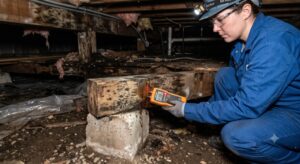
Wood moisture readings help determine whether joists, beams, sill plates, and subflooring are holding more water than surrounding materials. Elevated readings across several framing members may point to persistent humidity, ground vapor, or drainage problems rather than one isolated leak. Technicians usually compare multiple areas because a single damp board does not explain conditions throughout the crawl space. Consistently high readings matter because lumber that stays wet for extended periods becomes more vulnerable to fungal decay, fastener corrosion, dimensional changes, and loss of structural strength. Homeowners searching for crawl space repair near me should expect the inspection to document where readings were taken and how those numbers relate to visible damage.
Can Moisture Patterns Identify Where Water Is Entering?
Different moisture levels across the crawl space can reveal the direction water travels. Higher readings near one foundation wall may suggest surface runoff or a drainage failure, while dampness concentrated beneath a bathroom could point toward a plumbing leak. Gradual increases from the center toward the perimeter may indicate groundwater moving inward through soil.
Location matters just as much as the number itself. Inspectors often compare wood, masonry, soil, insulation, and nearby ductwork to see whether the moisture pattern follows a pipe, downspout, low section of grading, or open foundation vent. Providers of crawl space repair in Huntsville AL may also account for seasonal rain and humid conditions that keep clay-rich soil wet longer than expected. Mapping those differences prevents unnecessary work in dry areas while directing attention toward the source.
Relative Humidity Reveals What the Air Is Doing to the Structure
Relative humidity measures the amount of moisture held in the crawl space air compared with the maximum it could hold at that temperature. High readings can create problems even when no puddles or plumbing leaks are visible. Warm, humid air entering through vents may cool beneath the house and leave condensation on ducts, pipes, joists, and metal connectors. Repeated exposure can encourage mold growth, cause insulation to sag, and keep framing damp enough to deteriorate slowly. Anyone comparing crawl space waterproofing near me should ask whether humidity is being measured at several locations rather than judged by how the space feels.
Surface Moisture Can Point to Condensation Instead of Groundwater
Condensation produces a different pattern from water rising through the soil. Cool metal ducts, plumbing lines, and nearby wood may show high surface readings while the ground beneath them remains relatively dry. This distinction can change the repair plan because adding a drainage system would not correct humid air condensing on cold surfaces.
Temperature readings help complete the picture. Contractors may compare air temperature, surface temperature, and humidity to determine whether materials are approaching the dew point, where airborne moisture begins turning into liquid water. Clear evidence of condensation may lead to vent sealing, air control, duct insulation, or dehumidification rather than excavation. Matching the solution to the actual moisture source keeps crawl space repair focused and avoids treating symptoms that come from a different cause.
Damp Soil Readings Explain How Much Moisture Is Rising From Below
Exposed soil can release moisture into a crawl space long after a storm ends. Readings taken at several points may show whether the ground stays wet throughout the area or only near specific walls and low spots. Saturated sections can indicate poor exterior grading, groundwater intrusion, leaking drain lines, or runoff entering through foundation openings. A vapor barrier can reduce evaporation from the soil, but standing water usually needs drainage before the barrier is installed. Soil moisture measurements therefore help contractors decide whether encapsulation alone will be enough or whether the site first needs a sump pump, perimeter drainage, or exterior corrections.
Why Do Contractors Compare Readings After Heavy Rain and Dry Weather?
Weather changes can reveal problems that one inspection might miss. Measurements taken after several dry days provide a useful baseline, while readings after heavy rainfall can show how quickly water enters and which sections remain wet the longest. A sharp increase near one wall may connect the problem to gutters, downspouts, or surface grading rather than general humidity.
Seasonal comparisons can also expose recurring soil conditions. Alabama heat may dry one side of a house faster than another, while shaded areas remain damp and keep nearby piers or framing under higher moisture stress. Reliable crawl space repair contractors consider these changes before recommending permanent supports or wood reinforcement because wet soil can affect both framing durability and footing stability. Repeated measurements make it easier to distinguish temporary weather effects from a continuing moisture problem.
Moisture Readings Help Determine Whether Structural Repairs Can Start Safely
Structural work should not trap new lumber, steel connectors, or support components inside an environment that remains excessively damp. Measurements taken before installation help confirm whether drainage, drying, or dehumidification needs to come first. You can trust Kennedy and Sons to look beyond the obvious signs of crawl space damage. Their team checks wood moisture, humidity, soil conditions, drainage, framing, and other structural concerns to find out what is keeping the area wet and recommend repairs that address both the damage and the source of the moisture.
Veeramachineni Lalitha

I am Finance Content Writer. I write Personal Finance, banking, investment, and insurance related content for top clients including Kotak Mahindra Bank, Edelweiss, ICICI BANK and IDFC FIRST Bank. My experience details : Linkedin