

A church is more than a Sunday morning destination. It’s a day-care and counseling center. It hosts digital payments and community events. It’s an employer, and sometimes an employer of childcare workers if your members have children on site during the week. Churches function as all these things simultaneously. But are you protected when everything doesn’t go right? Perhaps not.
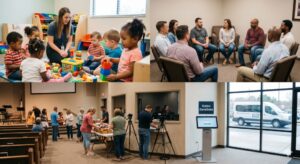
The Modern Church is a Complex Operation
Thirty years ago our general liability policy covered most of what you needed. Slip-and-fall during service, damage to a visitor’s property on the premises, that was the bulk of the risk. Now you probably operate a licensed day-care, host weekly AA meetings open to the public, stream your services to thousands, and manage a database of member financial information. Each of those activities is a separate category of legal exposure.
Premises liability is still the foundation. Any time someone enters your property as an invitee, a first-time visitor, a community member attending your food pantry, a contractor doing repairs, you have a duty of care. High-traffic events like holiday services or outreach programs multiply your exposure considerably. A wet floor, an unmarked step, a poorly lit parking lot: these are the claims we see most often, and they’re not small.
Nearly 1 in 3 churches will face a significant legal threat or lawsuit at some point (Church Law & Tax Internal Risk Management Report), with personal injury, property disputes, and employment matters leading the list. That’s not a fringe risk. That’s a near-certainty across your congregation’s lifespan.
Protecting Leadership and Staff
Nonetheless, both D&O insurance and EPLI coverage are fairly specialized products. Many smaller churches and worship organizations don’t know they exist. Given that risks in this area require a specialized kind of damage control, that’s a problem. Church leaders who want to look into legal protection for churches should include a regular review by a specialized ministries agent to ensure that the church’s risk profile is properly documented and that every available safeguard is in place. With the right coverage and the right amount of coverage, faith-based organizations and religious institutions can perform their important work with the peace of mind of knowing they are protected.
Where General Liability Ends and Specialty Coverage Begins
General liability insurance can protect your ministry if you’re ever sued for causing someone’s injury or damaging someone’s property. For example, if someone slips and falls on your property and breaks an arm, general liability will typically pay for their medical bills and your legal fees if they sue. General liability does not cover situations like pastoral counseling errors, data breaches, or claims of staff misconduct. This would be a lawsuit related to the professional liability, or cyber liability.
That gap matters more than many church leaders realize. Directors and Officers (D&O) insurance protects your board and senior staff when decisions made in their official roles are challenged – budget disputes, personnel matters, or allegations of mismanagement. Employment Practices Liability Insurance (EPLI) covers claims from staff or volunteers alleging wrongful termination, discrimination, or harassment. And professional liability steps in when a pastoral counselor or youth minister is accused of causing harm through the advice or care they provided. Each fills a specific gap that a standard general liability policy simply wasn’t designed to address.
The Digital Risk Most Ministries Aren’t Prepared For
Online donations, cloud-based databases, and digital archives have become an integral part of religious institutions to operate more effectively. However, these systems have also incurred various risks. In light of such a phenomenon, cyber liability insurance is crucial to protecting the church’s financial and sensitive data in case of a cyber attack. Cyber liability insurance policies cover the costs associated with a data breach. These costs may include identifying the cause of the breach, notifying the individuals affected by the breach and the media, and repairing computer systems. The policy may also include legal defense fees and any settlement if the church is sued for not adequately protecting its constituent’s data.
Similar to this, if your religious institution owns or regularly uses vehicles that are not listed on your insurance policy, then any accidents that occur while driving it will most likely not be covered under your insurance policy. This is where hired and non-owned auto insurance come into play. It is typically added as a rider to your existing policy and will cover a certain amount of damages if someone has an accident while driving a vehicle that they do not own nor is owned by your organization.
Stewardship Includes Protecting What You’ve Built
Having insurance doesn’t mean you don’t have faith. In fact, it could mean just the opposite. Would you say a seatbelt is a sign of disbelief in a car’s ability to get you safely from point A to point B? Not likely. If you’re the type to fasten your seatbelt, and even make sure your passengers do the same, you probably just want to arrive at your destination without unnecessary bumps, injuries, or distractions along the way. It’s about protecting the ride and arriving safely.
Veeramachineni Lalitha

I am Finance Content Writer. I write Personal Finance, banking, investment, and insurance related content for top clients including Kotak Mahindra Bank, Edelweiss, ICICI BANK and IDFC FIRST Bank. My experience details : Linkedin