

The Fundamental Principles of Industrial Drum Dryers
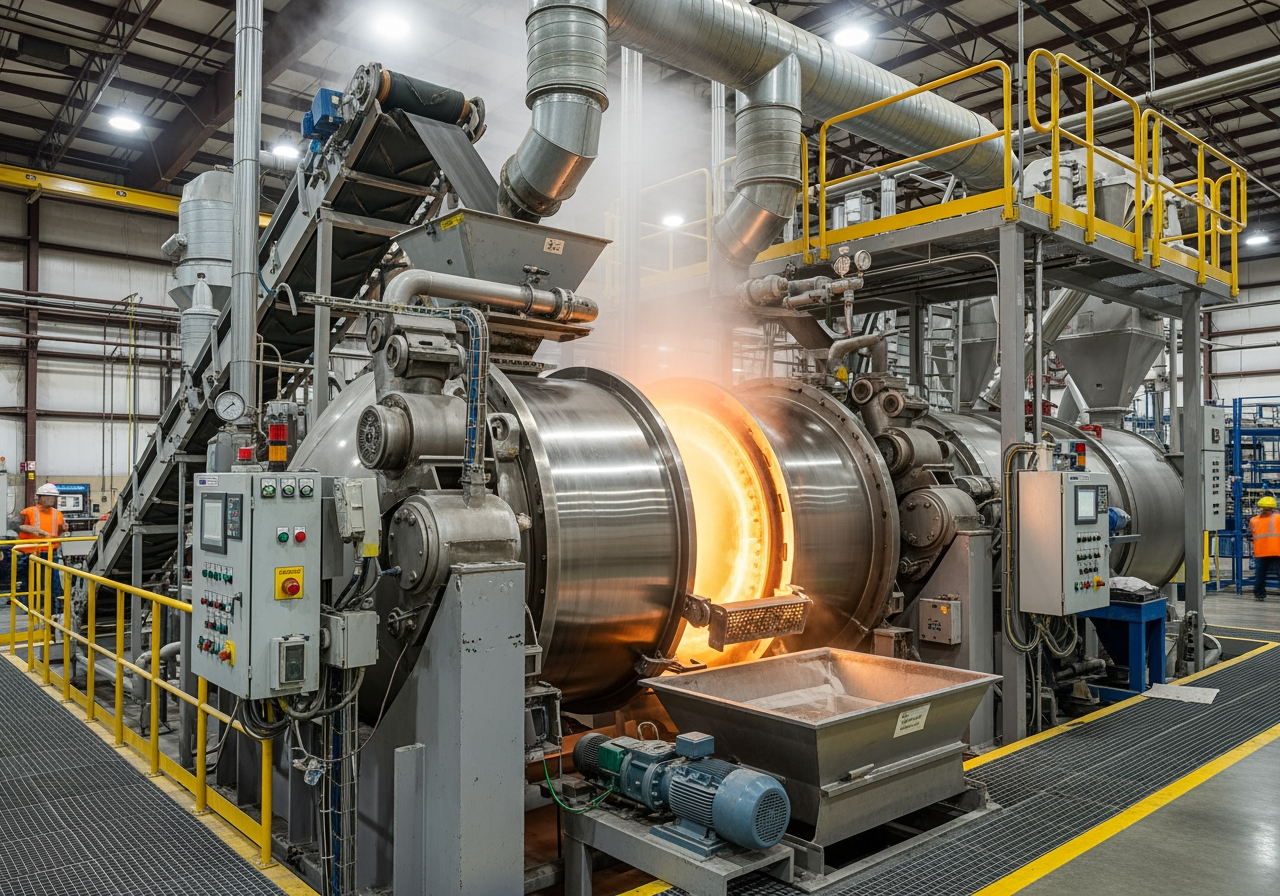 In industrial production, controlling moisture is a constant challenge. Whether preserving food, processing chemicals, or preparing minerals, efficient drying is essential. It directly impacts product quality, safety, shelf life, and operational efficiency.
Industrial drum dryers are a cornerstone technology in many sectors. These robust machines are vital for removing moisture from a vast array of materials.
This guide will provide a deep dive into industrial drum dryers. We will explore their basic working principles and the differences between direct and indirect heating. We will also cover their key applications, essential components, and crucial design factors. Understanding the breadth of available options, including specialized Buflovak industrial drum dryer solutions, is key to successful implementation. Our aim is to help you confidently select the best drying solution for your specific needs.
At its core, an industrial drum dryer, often referred to as a rotary dryer, is designed to reduce the moisture content of a material by bringing it into direct or indirect contact with a heated gas or surface. This process relies on fundamental principles of heat and mass transfer.

The primary mechanism involves heat transfer from a hot medium to the wet material, causing the moisture (typically water) to evaporate. This heat transfer can occur through:
- Conduction: Direct contact between the hot surfaces of the dryer and the material. This is particularly prominent in indirect dryers where the drum walls are heated.
- Convection: The transfer of heat through the movement of a fluid, such as hot air or combustion gases, which directly contacts the material. This is the dominant mode in direct-heated dryers.
Simultaneously, mass transfer occurs as the evaporated moisture is carried away from the material’s surface into the surrounding gas stream. For efficient drying, this moisture-laden gas must be continuously removed from the dryer.
A key characteristic of industrial drum dryers is the material agitation they provide. As the drum rotates, internal lifting flights (or lifters) scoop up the material and cascade it through the hot gas stream or across heated surfaces. This continuous tumbling action ensures that fresh material surfaces are constantly exposed to the drying medium, maximizing the rate of heat and mass transfer and promoting uniform drying. This mechanical action is crucial for preventing agglomeration and ensuring consistent product quality.
Essential Components and Their Functions
Understanding the individual components of an industrial drum dryer helps to grasp its overall operation:
- Rotating Drum: The cylindrical body, typically inclined slightly, that houses the material. Its rotation is central to the drying process, ensuring material agitation and progression. Rotary dryers can range significantly in size, with diameters typically from 3 to 15 feet (1 to 4.6 meters).
- Internal Flights (Lifters): These are strategically designed plates or baffles attached to the inner wall of the drum. Their primary function is to lift the material and shower it through the hot gas stream as the drum rotates, maximizing contact and drying efficiency. The design and arrangement of these flights are critical for optimal heat transfer.
- Drive System: Consists of motors, gears, and support rollers that rotate the drum at a controlled speed. This system ensures consistent material movement and residence time within the dryer.
- Support Structure: A robust framework, including trunnion rollers and thrust rollers, that supports the heavy rotating drum and maintains its precise alignment.
- Feed Hopper: Where the wet material is introduced into the dryer, typically at the liftd end.
- Discharge System: Located at the lower end of the drum, it collects and removes the dried product.
- Heat Source: Provides the thermal energy required for drying. This can be a direct-fired burner (using gas, oil, or coal) or an indirect heat exchanger (using steam, thermal oil, or hot air).
For a visual representation and further details on the components and uses of these robust machines, one might refer to a comprehensive Drum Dryer (Rotary Dryer) Diagram And Uses.
Understanding Material and Gas Flow
The interaction between the material and the heated gas stream is fundamental to a drum dryer’s performance.
- Residence Time: This refers to the amount of time the material spends inside the dryer. It’s a critical parameter, influenced by drum length, diameter, inclination, rotational speed, and the characteristics of the material itself. Proper residence time ensures adequate drying without over-drying or under-drying the product.
- Co-current Flow: In this configuration, both the wet material and the hot drying gas enter the dryer at the same end (typically the feed end) and flow in the same direction towards the discharge end. This results in the hottest gas contacting the wettest material, leading to rapid initial drying. As the material dries and moves along, the gas cools, making it suitable for materials that can tolerate high initial temperatures or those that are heat-sensitive once dry.
- Counter-current Flow: Here, the wet material enters at one end, and the hot drying gas enters at the opposite (discharge) end, flowing in counter-direction. The hottest gas contacts the driest material, while the cooler, moisture-laden gas contacts the wet material. This setup is generally more energy-efficient and results in lower final product moisture content, making it ideal for materials requiring very low moisture levels or those that cannot withstand high temperatures when wet.
- Impact on Drying Efficiency: The choice between co-current and counter-current flow significantly impacts thermal efficiency, product quality, and the overall drying process. For instance, co-current flow can protect heat-sensitive products by rapidly cooling the gas as moisture evaporates, while counter-current flow maximizes the temperature difference across the entire drying length, leading to higher overall efficiency.
- Material Characteristics: The physical and chemical properties of the material being dried (e.g., particle size, density, moisture content, heat sensitivity, abrasiveness, stickiness) dictate the optimal gas flow, drum design, and operating parameters.
Direct vs. Indirect Heating: Choosing the Right Method
The method of heating is a primary differentiator among industrial drum dryers, profoundly impacting their design, applications, and performance. The choice between directly and indirectly heated drum dryers hinges on factors such as thermal efficiency, the risk of product contamination, and specific process requirements.
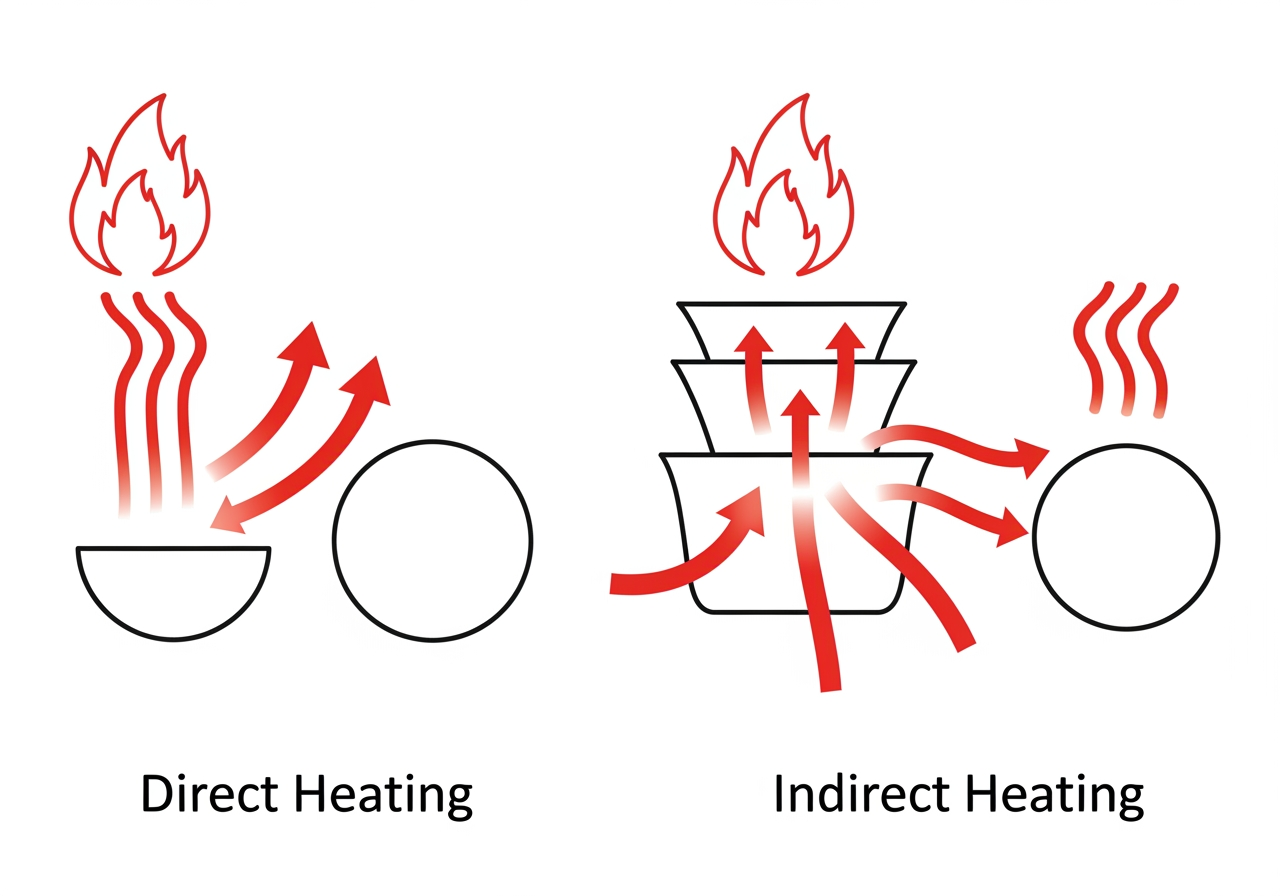
Directly Heated Drum Dryers
Working Principle: In directly heated drum dryers, the hot drying medium (typically combustion gases from a burner) comes into direct contact with the material being dried. The burner fires into the rotating drum, and the hot gases flow through the drum, transferring heat to the material as it tumbles.
Combustion Gases: The heat source is often a burner fueled by natural gas, propane, oil, or even solid fuels like coal. The hot combustion products, along with ambient air, form the drying gas stream.
High-Temperature Applications: These dryers are exceptionally robust and capable of handling very high inlet temperatures, making them suitable for materials that are not heat-sensitive or where contamination from combustion byproducts is not an issue.
Materials: Directly heated drum dryers are widely used for materials such as aggregates (sand, gravel), minerals (ores, limestone), and various biomass products (wood chips, OSB strands, agricultural by-products). The FEECO website, for example, highlights how their direct rotary dryers are the workhorse for processing a wide variety of materials across nearly any industry requiring industrial drying solutions, including aggregates, animal feeds, biosolids, fertilizers, and mining ores.
Pros:
- High Thermal Efficiency: Direct contact between hot gases and material leads to very efficient heat transfer.
- Robust Design: Capable of handling large throughputs and high temperatures.
- Cost-Effective: Often simpler in design and operation, leading to lower capital and operating costs for suitable applications.
Indirectly Heated Drum Dryers
Working Principle: Indirectly heated drum dryers prevent the drying medium from directly contacting the material. Instead, heat is transferred through the drum wall. The drum can be enclosed in a furnace, or heated by steam, thermal oil, or hot water circulated through jackets or internal tubes.
Heat Sources: Common indirect heat sources include:
- Steam Tubes: Steam is circulated through tubes or jackets within or around the drum, transferring heat to the drum surface.
- Thermal Oil: Hot thermal oil can be used similarly to steam, offering higher temperatures and lower pressures.
- Enclosed Furnace: The entire drum can be enclosed within a furnace, where hot combustion gases heat the exterior of the drum, which then transfers heat to the material inside.
Heat-Sensitive Materials: This method is preferred when product purity is paramount, or when the material is heat-sensitive and cannot tolerate direct exposure to combustion gases.
Applications: Indirectly heated drum dryers are ideal for applications in the food industry (e.g., cereals, milk products, yeast, pre-gelatinized starch), pharmaceuticals (APIs, excipients), and fine chemicals where product integrity and cleanliness are critical. ANDRITZ Gouda contact drum dryers, for instance, have been specialized in food processing lines for over a century, emphasizing hygienic design and indirect steam heating for products like baby food and milk.
Pros:
- Product Purity: No contact with combustion gases means no risk of contamination from soot or combustion byproducts.
- Precise Temperature Control: Easier to maintain uniform and precise temperatures, crucial for heat-sensitive materials.
- Environmental Benefits: Can be designed with closed systems to prevent emissions, especially when drying materials with volatile organic compounds (VOCs).
- Versatility: Can be used for a wide range of materials, including wood flakes, fine bulk solids, and free-flowing biomass, as noted by some manufacturers specializing in these robust systems.
Comparing Direct vs. Indirect Drum Dryers
Criteria Directly Heated Drum Dryers Indirectly Heated Drum Dryers Heat Source Combustion gases (natural gas, oil, coal) Steam, thermal oil, hot water, hot air, electric heaters Heat Transfer Convection (direct contact of hot gas with material) Conduction (through drum wall or internal tubes) Efficiency Very high thermal efficiency due to direct contact High thermal efficiency, but often lower than direct due to heat losses through drum wall Contamination Risk Higher risk of product contamination from combustion byproducts Minimal to no risk of product contamination Typical Applications Aggregates, minerals, sand, ores, biomass, industrial waste, fertilizers Food products, pharmaceuticals, fine chemicals, pigments, heat-sensitive materials Temperature Range Can handle very high inlet temperatures More precise and controlled temperatures, suitable for lower to moderate temperatures Product Contact Direct contact with drying gases No direct contact with heat source or combustion gases The choice between direct and indirect heating is a critical design decision, directly influencing the suitability of the dryer for a given material and process.
Key Applications of Industrial Drum Dryers
Industrial drum dryers are renowned for their versatility and ability to process a vast array of materials across numerous industries. Their robust design and capacity for high-throughput processing make them indispensable in modern manufacturing and resource management. We often see these systems handling materials from fine powders to large granules, demonstrating their broad industrial utility.

Rotary dryers, in particular, are considered the “workhorse” of industrial dryers, capable of processing a wide variety of materials across nearly any industry requiring industrial drying solutions. For instance, rotary dryers have a capacity range of 1 TPH to 200 TPH (1 MTPH to 181 MTPH+), making them suitable for both small and very large-scale operations.
Food, Feed, and Agricultural Processing
In these sectors, drum dryers are crucial for preserving products, enhancing shelf life, and preparing ingredients.
- Grains and Cereals: Drying corn, wheat, rice, and other grains to prevent spoilage and ensure quality.
- Animal Feeds: Processing various feed components to create nutritious and stable animal feed.
- Fertilizers: Drying granulated fertilizers to improve handling and storage properties.
- Manure and Biosolids: Converting animal manure and municipal biosolids into valuable soil amendments or fuel sources.
- Sugars and Starches: Drying sugar crystals, starches (e.g., pre-gelatinized starch), and other food ingredients.
- Distillers’ Grains: Drying byproducts from ethanol production (DDGS) for use as animal feed.
- Fruits and Vegetables: Dehydrating produce for extended shelf life and convenience.
- Dairy Products: Producing powdered milk and other dairy derivatives.
- Yeast: Drying yeast for various applications, from baking to brewing.
Many food products have been industrially dried using drum drying technology for over a century, with the process allowing products to retain unique properties like taste, smell, and texture.
Chemicals and Pharmaceuticals
Precision and purity are paramount in these industries, making indirectly heated drum dryers particularly valuable.
- Inorganic Chemicals: Drying salts, pigments, and other inorganic compounds.
- Organic Chemicals: Processing various organic powders and granules.
- Catalysts: Drying catalysts used in chemical reactions.
- APIs (Active Pharmaceutical Ingredients) and Excipients: Drying pharmaceutical compounds to precise moisture levels for stability and formulation.
- Polymer Pellets: Drying plastic pellets and grains before further processing.
Minerals, Mining, and Construction
These industries often require robust, high-capacity direct-heated drum dryers to handle abrasive and high-volume materials.
- Sand, Stone, and Ore: Drying construction aggregates, various types of sand (e.g., frac sand), and mineral concentrates to facilitate further processing or transport.
- Limestone and Gypsum: Drying these raw materials for cement production, wallboard, and other applications.
- Coal: Drying coal to improve its combustion efficiency and reduce transport costs.
- Metal Concentrates: Drying concentrates from mining operations.
- Roofing Granules: Processing granules for roofing materials.
The broad utility of rotary drum dryers is exemplified by their use in applications processing materials such as aggregates, agricultural by-products, animal feeds, biosolids, catalysts, fertilizers, fly ash, gypsum, inorganic chemicals, limestone, manure, metal chips & shavings, mining ores & concentrates, organic chemicals, paper sludge, plastic pellets & grains, potash, reclaimed dust, roofing granules, rubber pellets, salts & sugars, sand, steel mill waste sludges, and urea prills & crystals.
Environmental and Waste Management
Drum dryers play a crucial role in converting waste materials into valuable resources or reducing their volume for disposal. We see them processing a diverse list of challenging materials:
- Biosolids (Municipal Sewage Waste & Sludge): Drying wastewater treatment byproducts for safe disposal or beneficial reuse.
- Paper Sludge: Drying sludge from paper mills.
- Industrial Waste: Processing various industrial waste streams to reduce volume and potential hazards.
- Reclaimed Dust: Drying and processing dust collected from industrial operations.
- Pomace: Drying fruit and vegetable processing residues.
- Bagasse: Drying sugarcane residue for bioenergy.
This extensive list underscores the indispensable role of industrial drum dryers across the global economy, providing efficient and effective solutions for moisture removal in countless processes.
Key Considerations for Buflovak Industrial Drum Dryer Solutions
When considering industrial drum dryer solutions, particularly those from a reputable manufacturer like Buflovak, several key factors come into play. These considerations ensure that the chosen system aligns perfectly with specific production goals, material characteristics, and operational demands. We focus on customization, process efficiency, product quality, energy consumption, and throughput capacity to deliver optimal drying outcomes.
Design Factors Influencing Efficiency in Buflovak Industrial Drum Dryer Solutions
The efficiency and suitability of a rotary drum dryer are heavily influenced by its design parameters. We engineer our systems with these factors in mind to maximize performance:
- Drum Diameter and Length: These dimensions dictate the volume of material that can be processed and the residence time available for drying. A longer drum generally allows for more contact time and higher throughput for a given diameter, while a larger diameter can accommodate higher volumes and ensure proper cascading of material.
- Drum Inclination: The angle at which the drum is set affects the material’s flow rate through the dryer. A steeper inclination increases the material’s velocity, reducing residence time, and vice-versa. This is carefully calibrated for each application.
- Rotational Speed: The speed of the drum’s rotation impacts how effectively the flights lift and cascade the material. Too slow, and material might ‘pool’; too fast, and it might ‘centrifuge’ against the wall, both reducing drying efficiency.
- Flight Design and Density: The shape, size, and spacing of the internal flights are crucial. They are designed to optimize the showering pattern of the material through the hot gas stream, ensuring maximum surface area exposure for heat and mass transfer. Different materials require different flight designs.
- Single-shell vs. Double-shell Design: While single-shell designs are common, double-shell (or triple-shell) dryers can offer advantages in terms of space efficiency and heat recovery. Multiple concentric shells allow for a longer effective drying path within a smaller footprint, often incorporating heat recovery mechanisms.
Selecting the Right System and The Role of Pilot Testing
Choosing the most appropriate industrial drum dryer is a complex decision that requires a thorough understanding of the material and the desired outcome. We approach this by:
- Material Properties Analysis: We carefully analyze the physical and chemical properties of the material, including initial and desired final moisture content, particle size distribution, bulk density, abrasiveness, stickiness, and heat sensitivity.
- Throughput Requirements: Understanding the required processing capacity (e.g., tons per hour) is critical for sizing the dryer correctly.
- Pilot Plant Testing: This is an invaluable step in our process. Before committing to a full-scale system, we conduct pilot-scale drying tests with your actual material. This allows us to:
- Determine optimal operating parameters (temperature, residence time, gas flow).
- Evaluate material behavior during drying.
- Confirm product quality specifications.
- Gather data for accurate scale-up and design of the commercial unit.
- This hands-on approach minimizes risks and ensures the final solution meets all performance expectations. Our commitment to this rigorous process ensures that every solution is custom to specific needs, as highlighted in our blog post, Drum Dryers Help Processors Maximize Efficiency and Product Quality.
- Custom Engineering: Based on material analysis, throughput, and pilot testing results, we custom-engineer the drum dryer to your exact specifications. This includes selecting the appropriate heating method (direct or indirect), drum dimensions, flight design, and ancillary equipment. Our comprehensive range of thermal drying and solidification products, including Atmospheric Single Drum Dryers and Atmospheric Double Drum Dryers, showcases our ability to provide custom solutions. For more specialized needs, we also offer Vacuum Double Drum Dryers and Cooling Drum Flakers as part of our extensive product line.
Advanced Features in Modern Buflovak Industrial Drum Dryer Solutions
Modern industrial drum dryers incorporate advanced technologies to improve efficiency, control, and environmental performance:
- Advanced Automation and Integrated Control Systems: State-of-the-art PLCs (Programmable Logic Controllers) and SCADA (Supervisory Control and Data Acquisition) systems provide precise control over temperature, drum speed, gas flow, and material feed rates. This allows for real-time monitoring, data logging, and optimization of the drying process, ensuring consistent product quality and energy efficiency.
- Energy Recovery Systems: To reduce operational costs and environmental impact, modern dryers often integrate heat recovery systems. This can involve recovering heat from exhaust gases to preheat incoming air or material, or utilizing waste heat from other processes.
- Hygienic Design Standards (HACCP, EHEDG): For food, pharmaceutical, and other sensitive applications, dryers are designed to meet stringent hygienic standards. This includes features like smooth, easy-to-clean surfaces, minimal crevices, and quick-release components for thorough sanitation, adhering to principles like HACCP and EHEDG.
- High-Performance Coatings: Specialized coatings on drum surfaces or internal components can improve wear resistance, prevent material sticking, and improve heat transfer, extending equipment lifespan and reducing maintenance.
- Reduced Emissions: Modern designs incorporate advanced emission control technologies, such as cyclones, baghouses, and wet scrubbers, to capture particulate matter and reduce air pollutants, ensuring compliance with environmental regulations.
These advanced features collectively contribute to more efficient, reliable, and environmentally responsible drying operations, reflecting our commitment to innovation in thermal processing solutions.
Safety, Environmental, and Maintenance Considerations
Operating industrial drum dryers involves significant operational responsibility, a commitment to sustainability, and diligent attention to equipment longevity. We prioritize these aspects to ensure safe, compliant, and efficient operations for our clients.
Ensuring Environmental Compliance
The operation of industrial drum dryers can generate emissions, primarily in the form of particulate matter and, in some cases, volatile organic compounds (VOCs). Environmental regulations are becoming increasingly stringent, making emission control a critical consideration. We implement various technologies to ensure compliance:
- Dust Collection Systems: Cyclones, baghouses (fabric filters), and electrostatic precipitators are commonly used to capture particulate matter from the exhaust gas stream, preventing it from being released into the atmosphere.
- Wet Scrubbers: These systems use a liquid (typically water) to remove pollutants from the exhaust gas, including particulates and certain gaseous contaminants.
- VOC Abatement: For processes that generate VOCs, technologies such as thermal oxidizers, catalytic oxidizers, or regenerative thermal oxidizers (RTOs) are employed to destroy these compounds, converting them into less harmful substances.
- Waste Heat Recovery: Integrating waste heat recovery systems not only improves energy efficiency but can also reduce the overall environmental footprint by lowering fuel consumption and associated emissions.
Prioritizing Operator Safety
Safety is paramount in any industrial setting, and drum dryer operations are no exception. We design our systems with a comprehensive approach to operator safety:
- Machine Guarding: All moving parts, such as drive mechanisms, gears, and rotating components, are equipped with robust guards to prevent accidental contact.
- Emergency Stops (E-stops): Strategically placed E-stop buttons provide immediate shutdown capabilities in emergency situations.
- Temperature and Pressure Monitoring: Continuous monitoring of critical parameters helps prevent overheating, over-pressurization, and other hazardous conditions. Alarms and automatic shutdown features are integrated.
- Lockout/Tagout (LOTO) Procedures: Clear and enforced LOTO procedures are essential during maintenance, cleaning, or repair to prevent unexpected startup of equipment.
- Proper Training: Comprehensive training for operators and maintenance personnel on safe operating procedures, hazard recognition, and emergency protocols is crucial. This includes understanding the specific risks associated with the materials being dried (e.g., flammability, toxicity).
Maintenance for Longevity and Performance
Consistent maintenance is key to maximizing the lifespan of an industrial drum dryer, ensuring its continuous, efficient operation, and safeguarding product quality.
- Routine Inspections: Regular visual inspections of all components – drum shell, flights, trunnion rollers, drive system, seals, and insulation – help identify wear, damage, or misalignment before they lead to major breakdowns.
- Lubrication Schedules: Adhering to manufacturer-recommended lubrication schedules for bearings, gears, and other moving parts is vital to prevent premature wear and reduce friction.
- Seal and Gasket Replacement: Seals and gaskets prevent leaks of product or drying gases and maintain thermal efficiency. Regular inspection and replacement are necessary to prevent energy loss and potential contamination.
- Monitoring Structural Integrity: Over time, the drum and its supports can experience stress. Regular checks for cracks, corrosion, or fatigue in the structural components ensure operational safety and prevent catastrophic failure.
- Flight Wear Analysis: The internal flights are subject to constant abrasion from the material. Monitoring their condition and replacing worn flights ensures optimal material cascading and drying efficiency.
By diligently addressing these safety, environmental, and maintenance considerations, we ensure that industrial drum dryers operate not only effectively but also responsibly and sustainably.
Conclusion: The Future of Industrial Drying
Industrial drum dryers stand as a testament to robust engineering, offering versatile and efficient solutions for moisture removal across a myriad of industries. Their fundamental principles of heat transfer and material agitation have been refined over decades, making them indispensable tools in modern production. From the high-capacity, direct-heated systems handling aggregates to the precise, indirectly heated units safeguarding sensitive food and pharmaceutical products, their adaptability is best.
The benefits are clear: improved product quality, extended shelf life, reduced transportation costs, and the ability to transform waste into valuable resources. As we’ve explored, the choice between direct and indirect heating, alongside meticulous design considerations such as drum dimensions, flight configuration, and gas flow, is paramount to optimizing performance for specific materials and processes. The importance of customization, often validated through rigorous pilot testing, cannot be overstated in achieving custom and highly efficient drying outcomes.
Looking ahead, the future of industrial drying will undoubtedly continue to be shaped by technological advancements. We anticipate further integration of advanced automation and AI for predictive maintenance and real-time process optimization, leading to even greater energy efficiency and reduced operational costs. The drive towards sustainability will push for more sophisticated energy recovery systems and increasingly stringent emission control technologies. Moreover, the demand for hygienic designs and specialized coatings will grow as industries like food and pharmaceuticals continue to evolve.
Industrial drum dryers will remain a cornerstone technology. Their continuous evolution ensures they will meet the ever-growing demands for efficiency, sustainability, and product quality, playing a critical role in the advancement of industrial processes worldwide.
Veeramachineni Lalitha

I am Finance Content Writer. I write Personal Finance, banking, investment, and insurance related content for top clients including Kotak Mahindra Bank, Edelweiss, ICICI BANK and IDFC FIRST Bank. My experience details : Linkedin